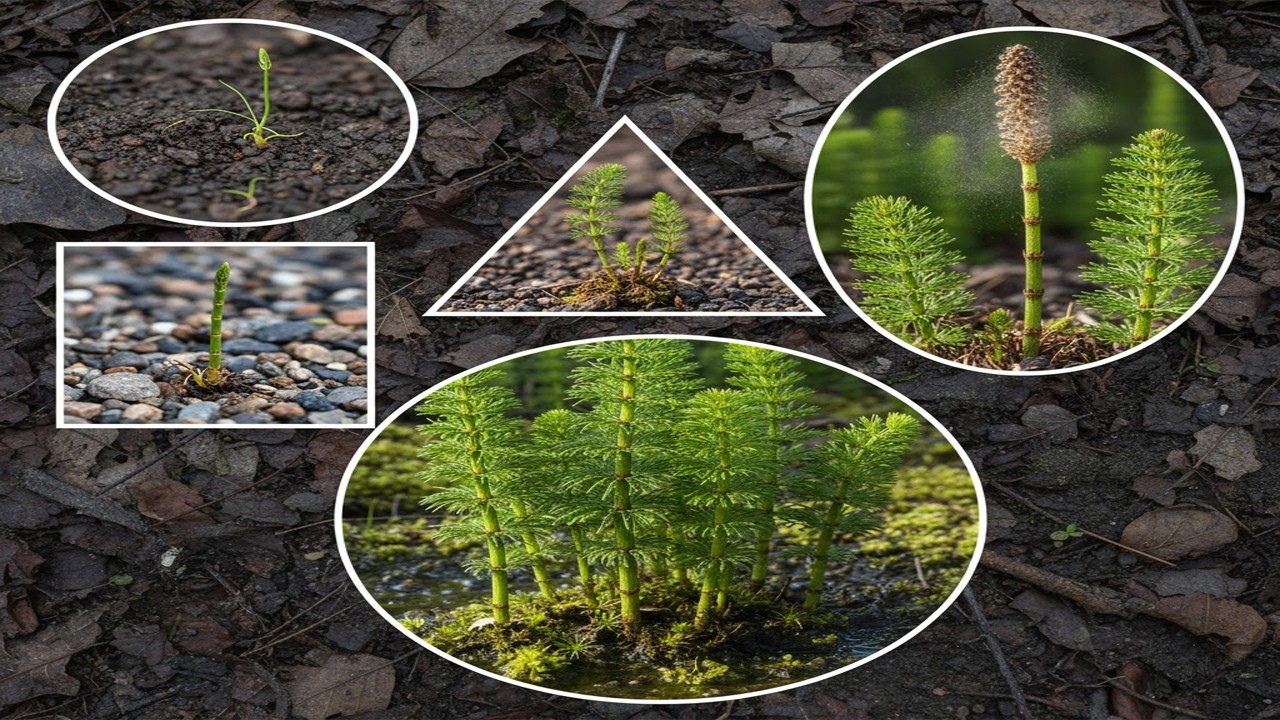
Horsetails, known scientifically as equisetum, are among the oldest surviving plants on Earth. The horsetail plant, often referred to as equisetum horsetail or equisetum horsetail plant, has a distinctive appearance with jointed equisetum stems and simple horsetail leaves. These plants are sometimes called horse tail, mare’s tail, or shave grass, and they thrive in moist environments. Common horsetail, equisetum arvense, and equisetum telmateia are popular species found in gardens, wetlands, and natural landscapes.
Understanding Different Types of Horsetail Plants
There are many varieties of equisetum plants, each with unique characteristics. Common horsetail plant and field horsetail equisetum arvense are widespread in temperate regions. Rough horsetail, bushy horsetail, and branched horsetail offer different textures and growth patterns. Aquatic horsetail grows near water bodies, while giant equisetum can reach impressive heights. Horsetail fern, sometimes described as fern horsetail, adds ornamental value to gardens. Artificial horsetail plant, faux horsetail, and fake horsetail grass are also available for decorative purposes when live plants are not suitable.
Planting Horsetails in Gardens and Ponds
Planting equisetum arvense plant or equisetum pond plant requires careful site selection. Horsetail grass prefers damp soil, often sandy or clay-rich, and thrives in areas with consistent moisture. When planting horsetail fern or equisetum telmateia near ponds, it is wise to use containers to control spreading. Horsetail root systems are vigorous, and equisetum stems regenerate quickly, so managing growth is essential. Gardeners often purchase horsetail plant for sale, equisetum for sale, or horse tail plant for sale from nurseries to start cultivation.
Propagation of Horsetail Plants
Horsetail propagation is straightforward. Dividing horsetail root sections or transplanting equisetum stems ensures new growth. Fresh horsetail and equisetum arvense plants for sale are often used for propagation. Horsetail leaf and equisetum leaf structures regenerate rapidly, making equisetum arvense horsetail easy to multiply. Field horsetail plant and barred horsetail pond plant varieties can be propagated in similar ways. For ornamental use, equisetum en pot and equisetum ornamental options are popular among landscapers.
Caring for Horsetails in Different Environments
Caring for horsetails involves regular watering and monitoring soil conditions. Horsetail fern and common horsetail plant thrive in moist soils with partial shade. Giant equisetum and equisetum telmateia for sale are suitable for larger landscapes. Horsetail bulk supplies are often used for natural screens or borders. Dry horsetail and fresh horsetail tea preparations highlight the plant’s resilience. Female horsetail and equisetum flower structures are simple but contribute to reproduction.
Controlling Horsetail Growth
Controlling horsetail is important because equisetum grass can become invasive. Eradicating horsetail or eradicating mares tail requires persistence. Destroying horsetail through physical removal or soil amendments like dolomite lime horsetail is common. Some gardeners experiment with killing horsetail with WD40, though natural methods are safer. Best treatment for mares tail often involves repeated cutting and soil improvement. Crossbow horsetail and bio equisetum references highlight different approaches to management.
Horsetail in Traditional Medicine and Wellness
Equisetum medicinal uses are well known. Horsetail and nettle tea, equisetum arvense tea, and equisetum tea are popular herbal remedies. Cola de caballo equisetum arvense, also called cavalinha equisetum arvense, is widely consumed in traditional medicine. Cola de caballo tea for kidney stones and cola de caballo tea good for general wellness are common applications. Horsetail for teeth and equisetum for horses are additional uses. Fermented horsetail tea, fresh horsetail tea, and dry horsetail preparations are valued for their health benefits.
Horsetail in Culture and History
Horsetails have a long cultural history. Ancestors horsetail references highlight their prehistoric lineage, while ancestors the humankind odyssey horsetail connects them to human evolution. Equisetum arvense acta plantarum documents their botanical significance. A horsetail has been admired for centuries as a symbol of resilience. Bambu equisetum and artificial horsetail grass are modern adaptations for design and landscaping.
Ornamental and Commercial Uses of Horsetails
Equisetum varieties are widely used in landscaping. Barred horsetail, banded horsetail, and barred horsetail rhs are popular ornamental choices. Equisetum telmateia for sale and equisetum arvense for sale are common in nurseries. Artificial horsetail, faux horsetail plant, and fake horsetail plant are decorative alternatives. Horsetail near me searches often lead to local suppliers offering horsetail bulk or equisetum arvense plants for sale.
Horsetail Tea and Herbal Preparations
Horsetail tea near me searches highlight its popularity in wellness communities. Best horsetail tea options include fresh horsetail tea and fermented horsetail tea. Cola caballo tea and horsetail and nettle tea are widely consumed. Dry horsetail and equisetum arvense leaf preparations are used for brewing. Horsetail bulk supplies ensure availability for herbalists.
Conclusion
Horsetails, or equisetum plants, remain one of the most fascinating ancient species still thriving today. From common horsetail plant and equisetum arvense horsetail to giant equisetum and horsetail fern, these plants offer both ornamental beauty and medicinal value. Whether you are planting horsetail grass in your garden, exploring equisetum medicinal teas, or managing invasive horsetail growth, understanding their unique characteristics ensures success. Horsetail plants continue to inspire gardeners, herbalists, and historians, making them a timeless addition to both landscapes and traditions.
