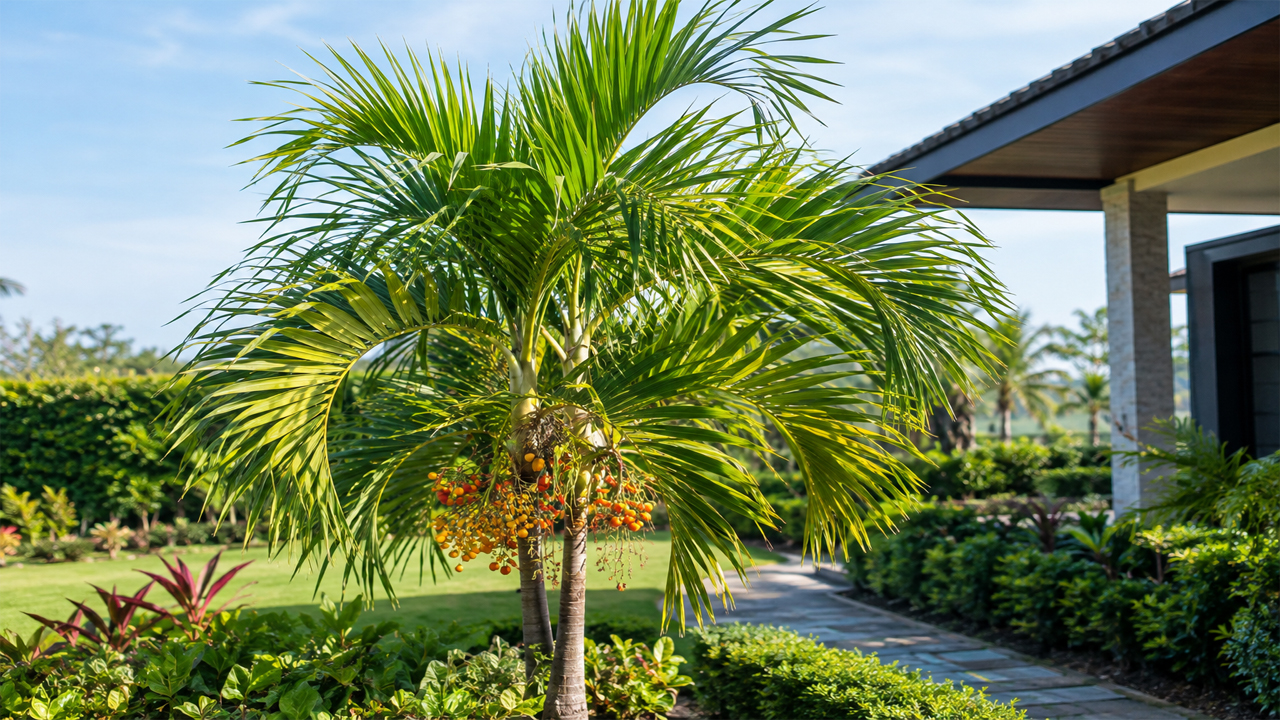
Adonidia merrillii, commonly known as the Christmas palm or Manila palm, is a popular tropical plant admired for its elegant appearance, manageable size, and attractive clusters of bright red fruits. Native to the Philippines, this palm brings a relaxed, resort-inspired atmosphere to residential gardens, patios, and landscaped outdoor spaces. Its slender trunk and graceful, arching green fronds make it an excellent choice for gardeners who want a tropical look without planting an excessively large palm.
The name Christmas palm comes from its colourful fruits, which often turn bright red around the holiday season in suitable tropical climates. Although the plant is associated with warm weather, its appeal extends throughout the year because its evergreen foliage provides consistent colour and structure.
With the right combination of sunlight, warmth, moisture, and well-drained soil, Adonidia merrillii can become a striking feature in a tropical landscape. Understanding its basic growing requirements is the first step towards maintaining a healthy and attractive specimen.
Ideal Climate and Growing Conditions
Christmas palms thrive in warm, humid environments and are best suited to tropical and subtropical regions. They prefer temperatures that remain consistently warm throughout the year and can suffer when exposed to prolonged cold. Frost may seriously damage the foliage and growing point, particularly in young plants.
A sheltered location is ideal, especially in gardens where strong winds or sudden temperature changes are common. Established palms generally tolerate ordinary tropical weather well, but extreme conditions can still affect their growth.
Gardeners in cooler climates can grow this palm in a large container and move it to a protected indoor space during cold periods. However, it needs sufficient light and warmth to remain healthy. In regions with cold winters, growing it permanently outdoors is usually unsuitable.
Humidity also plays an important role in maintaining attractive foliage. While the palm appreciates humid conditions, good air circulation helps prevent excessive moisture from remaining around the leaves and growing area.
Choosing the Right Sunlight and Planting Location
Light requirements depend partly on the plant’s age and growing environment. Christmas palms generally perform well in full sun to partial shade. A mature specimen planted in a suitable tropical climate can develop a fuller crown when it receives several hours of direct sunlight each day.
Young palms may benefit from some protection from intense afternoon sun, particularly when they have recently been transplanted. Gradually increasing their exposure can help them adjust to brighter conditions without unnecessary stress.
When choosing a location, consider the palm’s mature height and spread rather than its size at planting. Allow enough room for the crown to develop naturally without interfering with buildings, overhead structures, or nearby plants.
Christmas palms can be planted individually as a focal point or in groups to create a more dramatic tropical effect. Planting several specimens at regular intervals along a driveway or garden boundary can produce an elegant, organised appearance.
Soil Preparation and Proper Planting
Well-drained soil is essential for healthy Christmas palm growth. Although the plant appreciates consistent moisture, its roots should not remain waterlogged for extended periods. Poor drainage can encourage root problems and weaken the plant over time.
Before planting, examine the soil and improve its structure if necessary. Sandy or loamy soil that allows excess water to drain away is generally suitable. Heavy clay soil may require better drainage or a raised planting area, depending on local conditions.
Dig a hole that is wider than the root ball but no deeper than necessary. Position the palm so that the top of the root ball sits at approximately the surrounding soil level. Planting too deeply can interfere with healthy root development and increase the risk of moisture-related problems.
Backfill with the original soil, gently firm the area, and water thoroughly to settle the soil around the roots. Avoid piling soil or mulch against the trunk. A layer of organic mulch around the root zone can help retain moisture and regulate soil temperature, provided it remains clear of the trunk.
Watering Without Overwatering
Consistent watering is especially important while a newly planted Christmas palm establishes its root system. The soil should remain lightly moist, but it should never become persistently saturated. Watering frequency depends on temperature, rainfall, soil type, container size, and the plant’s stage of growth.
During hot weather, outdoor palms may need more frequent watering because moisture evaporates quickly. During cooler periods or rainy weather, watering can be reduced. Rather than following a rigid schedule, check the soil before adding more water.
Container-grown palms usually dry out faster than those planted in the ground, particularly when exposed to direct sunlight. Containers must have drainage holes to prevent water from collecting around the roots.
Signs of watering problems can overlap with symptoms of nutrient deficiencies or other plant stresses. Yellowing leaves, browning tips, or generally poor growth should therefore be assessed alongside soil moisture, drainage, sunlight, and recent weather conditions.
Fertilising for Healthy Leaves and Strong Growth
Christmas palms benefit from balanced nutrition, especially when grown in sandy soils that lose nutrients quickly. A slow-release palm fertiliser containing essential nutrients, including magnesium, manganese, and potassium, can help maintain healthy foliage when used according to the product label.
Fertilising during the active growing season is generally more useful than applying nutrients during cold weather or when the plant is under significant stress. Avoid excessive applications, as too much fertiliser can damage roots and contribute to leaf discolouration.
Yellowing between the veins, unusually pale foliage, or damaged older leaves may indicate a nutritional problem, but these symptoms are not conclusive on their own. Poor drainage, unsuitable watering, and root damage can produce similar signs.
Regular observation is more effective than automatically adding fertiliser whenever a leaf changes colour. Correcting the underlying problem helps the palm recover and supports more consistent growth.
Pruning and Routine Maintenance
One of the advantages of Adonidia merrillii is that it generally requires limited pruning. Remove dead, completely brown, or badly damaged fronds using clean, sharp tools. Green fronds should normally be left in place because they continue to support the plant through photosynthesis.
Avoid cutting off healthy leaves simply to create a smaller or more symmetrical crown. Excessive pruning can weaken the palm and reduce its ability to grow properly. Never cut into the growing point at the top of the trunk, as damage to this area can be fatal.
Inspect the foliage periodically for unusual spotting, pests, or changes in growth. Maintaining good drainage, providing appropriate nutrition, and avoiding unnecessary damage are important parts of preventive care.
The palm’s colourful fruits can add seasonal interest, although fallen fruit may require occasional cleaning around paths and patios. In areas where fruit drop is inconvenient, consider the planting location carefully before establishing a mature specimen.
Growing Christmas Palms in Containers
A Christmas palm can be grown in a container when outdoor space is limited or the climate requires seasonal protection. Choose a sturdy pot with adequate drainage and enough room for the root system to develop. A well-draining growing medium designed for tropical plants is a practical starting point.
Place the container in a bright location with suitable warmth. Water when the upper layer of the growing medium begins to dry, adjusting the frequency to the season and surrounding conditions. Avoid leaving the pot standing in a saucer filled with water.
Container-grown palms may eventually need repotting when their roots fill the available space or growth becomes restricted. Move the plant into a slightly larger container rather than an excessively large one, which can hold more moisture than the roots can use.
Although container cultivation offers flexibility, Christmas palms are not miniature plants. Their eventual size, weight, and light requirements should be considered before choosing a permanent position.
Designing a Tropical Garden Around Christmas Palms
Adonidia merrillii works particularly well in landscapes inspired by tropical resorts, coastal gardens, and contemporary outdoor living spaces. Its slender trunk and arching fronds provide vertical structure without creating the heavy visual appearance of some larger palm species.
For a balanced design, combine Christmas palms with lower-growing tropical plants, ornamental grasses, and broad-leaved foliage plants suited to the local climate. Contrasting leaf shapes and shades of green can make the landscape feel layered and natural.
A single palm can serve as a focal point near a lawn, courtyard, or outdoor seating area. Groups of palms can frame an entrance, define a garden pathway, or create a sense of rhythm along a boundary. When planting in groups, leave sufficient space for each crown to develop.
Natural stone, simple paving, timber seating, and restrained garden lighting can complement the palm’s tropical character. Avoid overcrowding the planting area, as too many competing plants can obscure the trunk and reduce the visual impact of the foliage.
Good design also considers practical needs. Keep mature palms away from areas where falling fruit may create a nuisance, and ensure that pathways remain accessible as surrounding plants grow.
Common Growing Problems and How to Prevent Them
The most common difficulties with Christmas palms involve cold exposure, poor drainage, unsuitable watering, and nutrient deficiencies. Brown leaf tips may result from environmental stress, while yellowing foliage can indicate several different problems.
Begin troubleshooting by examining recent weather conditions, soil moisture, drainage, and fertiliser use. Check whether the plant receives enough light and whether the growing point remains healthy. Make adjustments gradually instead of changing several aspects of care at once.
Pests should be identified before treatment is applied. Regular inspection helps gardeners notice developing problems early and choose an appropriate response. Where symptoms spread rapidly or the growing point deteriorates, advice from a qualified horticulturist or local plant specialist may be valuable.
Creating a Healthy and Lasting Tropical Feature
Growing Adonidia merrillii successfully depends on matching its natural preferences with the conditions available in the garden. Warm temperatures, suitable sunlight, well-drained soil, consistent moisture, and balanced nutrition provide the foundation for healthy growth.
Its graceful silhouette and seasonal red fruits make the Christmas palm a versatile choice for tropical landscaping, whether used as a solitary feature, planted in an elegant row, or incorporated into a layered garden design.
With thoughtful placement and regular but uncomplicated maintenance, this palm can provide lasting visual interest and a welcoming tropical atmosphere. The best results come from understanding the plant’s needs, responding to its growing conditions, and allowing its natural shape to become the highlight of the landscape.
