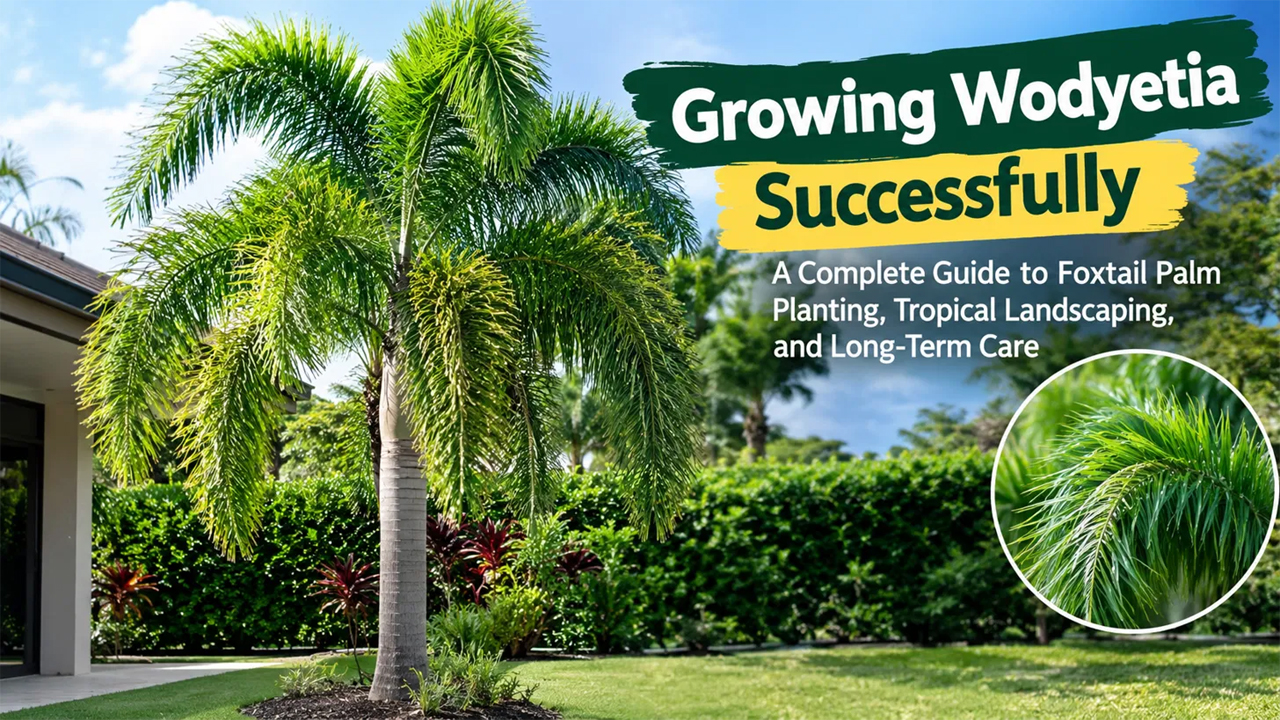
Wodyetia, commonly known as the foxtail palm, is one of the most attractive tropical palms for gardens, patios, and landscape designs. Recognized for its gracefully arching fronds and distinctive bushy leaves, this palm brings an elegant, tropical appearance to outdoor spaces. Its scientific name, Wodyetia bifurcata, refers to a species native to northeastern Queensland, Australia, where it grows in warm conditions and well-drained soils. With the right planting techniques and consistent care, gardeners can cultivate a healthy foxtail palm that remains an impressive feature of the landscape for many years.
Unlike some tropical palms that require extensive maintenance, the foxtail palm is relatively adaptable once established. It performs well in warm climates, tolerates periods of moderate dryness, and can thrive in a range of suitable soil types. However, successful growth depends on understanding its sunlight requirements, watering needs, nutritional preferences, and long-term development. Whether you are planting a young palm in your backyard or incorporating mature specimens into a tropical garden, a thoughtful approach will help encourage strong roots, lush foliage, and steady growth.
Choosing the Right Location for Foxtail Palm Planting
Selecting an appropriate planting location is one of the most important decisions when growing Wodyetia. Foxtail palms flourish in warm environments with plenty of sunlight, making them suitable for tropical and subtropical gardens. A location that receives at least six hours of direct sunlight daily generally supports vigorous growth and helps the palm develop its characteristic full, feathery crown.
Young palms can benefit from some protection from intense afternoon sunlight in exceptionally hot environments, particularly while their roots are becoming established. As the plant matures, it typically adapts well to sunny conditions. Avoid planting the palm in areas exposed to persistent cold winds, standing water, or severe frost, as these conditions can interfere with healthy development.
Space is another essential consideration. Although a young foxtail palm may initially appear compact, a mature specimen develops a substantial crown and can reach approximately 20 to 30 feet tall under suitable conditions, sometimes growing taller. Planting it too close to buildings, overhead structures, or neighboring trees may restrict its natural shape. Allowing sufficient room around the trunk also improves airflow and makes routine maintenance easier.
For landscape projects, foxtail palms work beautifully as individual focal points, in evenly spaced rows along driveways, or as part of a tropical planting arrangement. Their upright trunks and sweeping leaves create visual height without making the entire garden feel crowded.
Understanding Soil Requirements and Drainage
Healthy soil provides the foundation for successful foxtail palm cultivation. Wodyetia prefers fertile, well-drained soil that allows roots to receive both moisture and oxygen. Sandy loam is particularly suitable, although the palm can also grow in other soil types when drainage and fertility are adequate.
Poor drainage is one of the main problems to avoid. When water remains around the roots for extended periods, oxygen availability decreases and root health can deteriorate. Before planting, examine the site after rainfall to determine whether water drains away naturally. If the ground remains saturated, consider creating a raised planting area or choosing another location.
Gardeners working with heavy clay soil can improve the planting area by addressing its structure and drainage across a sufficiently broad area. Simply adding a small amount of sand to clay soil is not always effective and may make the soil denser. Instead, consider incorporating suitable organic matter where appropriate and improving drainage through proper site preparation.
The soil should also contain enough nutrients to support the palm’s steady development. A moderately acidic to neutral soil is generally suitable, although foxtail palms can tolerate some variation. A soil test can help identify pH imbalances and nutrient deficiencies before they affect growth.
When planting, dig a hole wider than the root ball but no deeper than necessary. Position the palm so the top of the root ball sits level with the surrounding ground. Backfill with the excavated soil, gently firm the area, and water thoroughly to settle the soil around the roots.
Watering Techniques for Strong Root Development
Water management plays a major role in the establishment and long-term health of Wodyetia. Newly planted foxtail palms require regular watering because their root systems need time to expand into the surrounding soil. During the initial establishment period, keep the root zone consistently moist without allowing it to become waterlogged.
The frequency of watering depends on temperature, rainfall, soil composition, and the size of the palm. Hot, dry weather may require more frequent watering, while periods of heavy rainfall reduce the need for additional irrigation. Rather than following a rigid schedule, check the soil moisture before watering.
Once established, foxtail palms become more tolerant of short periods of dry weather. Nevertheless, extended drought can slow growth, cause leaf tips to turn brown, and reduce the plant’s overall appearance. Deep watering encourages roots to explore the surrounding soil and can be more beneficial than frequent, shallow irrigation.
Applying a layer of organic mulch around the base helps conserve moisture and moderate soil temperature. Keep the mulch several inches away from the trunk to prevent excessive moisture accumulation around the stem. This simple practice also helps suppress weeds and gradually improves soil conditions as organic material decomposes.
Fertilizing Wodyetia for Lush Green Foliage
Foxtail palms benefit from balanced nutrition, especially when grown in sandy soils where nutrients may leach away quickly. A palm-specific fertilizer containing nitrogen, potassium, magnesium, and appropriate micronutrients can support healthy foliage and steady development.
Choose a product formulated for palms and follow the manufacturer’s application instructions. Many palm fertilizers contain controlled-release nutrients that become available gradually, reducing the risk of nutrient loss. Apply fertilizer during the active growing season when temperatures are favorable and the palm is producing new growth.
Nutrient deficiencies can cause visible changes in the leaves. Potassium deficiency may produce yellowing, spotting, or damage along older fronds, while magnesium deficiency can cause yellowing along the edges of older leaves with greener areas near the center. Iron or manganese deficiencies may affect younger foliage, sometimes producing pale or distorted new leaves.
However, similar symptoms can result from poor drainage, unsuitable soil pH, or root damage. Avoid applying large quantities of fertilizer simply because leaves appear discolored. Identifying the underlying problem will lead to better results and prevent unnecessary nutrient buildup.
Newly planted palms should be allowed to establish before receiving heavy fertilizer applications. With appropriate feeding, sufficient sunlight, and proper irrigation, Wodyetia can develop a full green crown that enhances the appearance of the garden.
Pruning and Routine Maintenance
One of the advantages of growing a foxtail palm is its naturally attractive growth habit. Its fronds form a rounded crown without requiring frequent shaping or intensive pruning. Routine maintenance should focus on removing completely dead or severely damaged leaves rather than cutting healthy foliage.
Green fronds continue to contribute to photosynthesis and help the palm maintain its energy reserves. Removing healthy leaves unnecessarily can weaken the plant and reduce its ability to withstand environmental stress. Avoid cutting the crown or damaging the growing point, as the palm depends on this central structure to produce new leaves.
Use clean, sharp pruning tools when removing damaged foliage. This helps create clean cuts and reduces the possibility of transferring pathogens between plants. If the palm becomes too tall for safe maintenance, professional assistance is advisable rather than attempting to climb or cut it without suitable equipment.
Keep the surrounding area free from weeds and excessive debris. Inspect the trunk, leaves, and crown periodically for discoloration, unusual spotting, or signs of pests. Consistent observation makes it easier to identify developing problems before they become severe.
Growing Foxtail Palms in Containers
Although foxtail palms are best suited to outdoor landscapes, young specimens can be grown in large containers under appropriate conditions. Container cultivation is useful for patios, courtyards, and locations where gardeners want flexibility when arranging their outdoor spaces.
Choose a sturdy pot with several drainage holes and enough room to accommodate root development. Use a well-draining potting mix suitable for palms or tropical plants. Avoid containers without drainage, because excess water can accumulate around the roots and cause serious problems.
Place the container where the palm receives abundant sunlight and protect it from prolonged exposure to cold temperatures. Water whenever the upper portion of the growing medium begins to dry, adjusting the frequency according to the weather and container size.
Container-grown palms may need more frequent watering and fertilization than those planted in the ground because their soil volume is limited. Check the roots periodically and repot when necessary, moving the plant into a larger container if the existing one becomes crowded.
Because Wodyetia eventually grows into a substantial palm, container cultivation is generally most practical during its younger stages. Long-term growth may require a permanent outdoor planting location in a suitable climate.
Managing Pests, Diseases, and Common Growing Problems
Foxtail palms are generally robust when grown under suitable conditions, but environmental stress can make them more vulnerable to pests and diseases. Regular inspections help gardeners recognize early warning signs and maintain healthy plants.
Look for unusual leaf discoloration, sticky residue, visible insects, or damage around the crown. Depending on the growing region, palm-feeding insects and mites may occasionally become a concern. If pests are present, identify them before choosing a treatment, and follow the product label carefully.
Root problems are often associated with excessive moisture or poorly drained soil. Yellowing foliage, declining growth, and a persistently wet root zone may indicate that irrigation practices need adjustment. Improving drainage and allowing the soil to dry appropriately between watering sessions can help prevent further damage.
Brown leaf tips may result from drought, salt accumulation, fertilizer injury, or environmental stress. Review recent watering and feeding practices before assuming that the plant needs additional nutrients. In coastal areas or gardens using mineral-rich irrigation water, salt buildup may also affect leaf quality.
Cold weather presents another challenge. Foxtail palms prefer warm conditions and can suffer damage during freezing temperatures. In regions that experience occasional cold spells, young palms benefit from suitable protection, while container-grown plants can be moved to a sheltered location when necessary.
Using Wodyetia in Tropical Landscaping
The foxtail palm is particularly effective in landscape designs that emphasize structure, height, and lush greenery. Its distinctive fronds contrast beautifully with broad-leaved tropical plants, flowering shrubs, ornamental grasses, and low-growing ground covers.
For a balanced design, use foxtail palms as focal specimens or arrange several palms at consistent intervals along a boundary or entrance. Their upright trunks create vertical interest, while the leafy crowns provide a soft, flowing appearance.
When combining Wodyetia with other plants, choose companions that tolerate similar sunlight, temperatures, and watering conditions. Keep smaller plants far enough from the trunk to avoid competition and ensure that maintenance remains convenient.
Foxtail palms can also complement modern homes, resort-style gardens, poolside landscapes, and spacious courtyards. However, avoid planting them so close to swimming pools or paved surfaces that falling fruits, leaves, or maintenance requirements become inconvenient.
A successful landscape balances visual appeal with the long-term needs of each plant. Giving foxtail palms adequate room to mature helps preserve their natural shape and reduces the need for corrective pruning.
Long-Term Care for Healthy, Mature Foxtail Palms
Long-term success depends on maintaining consistent growing conditions rather than relying on intensive interventions. Mature foxtail palms generally require less frequent watering than newly planted specimens, but they still benefit from deep irrigation during prolonged dry periods.
Refresh organic mulch when necessary, keeping it away from the trunk, and apply palm fertilizer according to seasonal growth patterns and soil conditions. Periodically assess drainage, inspect the foliage, and remove only dead or damaged fronds.
As the palm grows taller, consider how its mature crown will interact with nearby structures and other plants. Proper spacing at the beginning reduces future maintenance difficulties and allows the palm to become a lasting feature of the landscape.
Gardeners should also remember that foxtail palms do not produce their distinctive appearance overnight. Growth rates vary according to climate, soil fertility, water availability, and plant maturity. Patience and consistent care are more reliable than excessive watering or fertilization.
Conclusion
Growing Wodyetia successfully begins with choosing a warm, sunny location and providing well-drained soil, appropriate watering, and balanced nutrition. With careful planting and regular observation, the foxtail palm can develop into a striking tropical specimen that adds height, texture, and elegance to residential gardens and larger landscapes.
By protecting the roots, avoiding unnecessary pruning, managing pests promptly, and adapting care to seasonal conditions, gardeners can maintain healthy foliage and encourage steady growth over many years. Whether planted as a dramatic centerpiece or incorporated into a carefully planned tropical garden, Wodyetia offers an appealing combination of natural beauty, manageable maintenance, and enduring landscape value.
