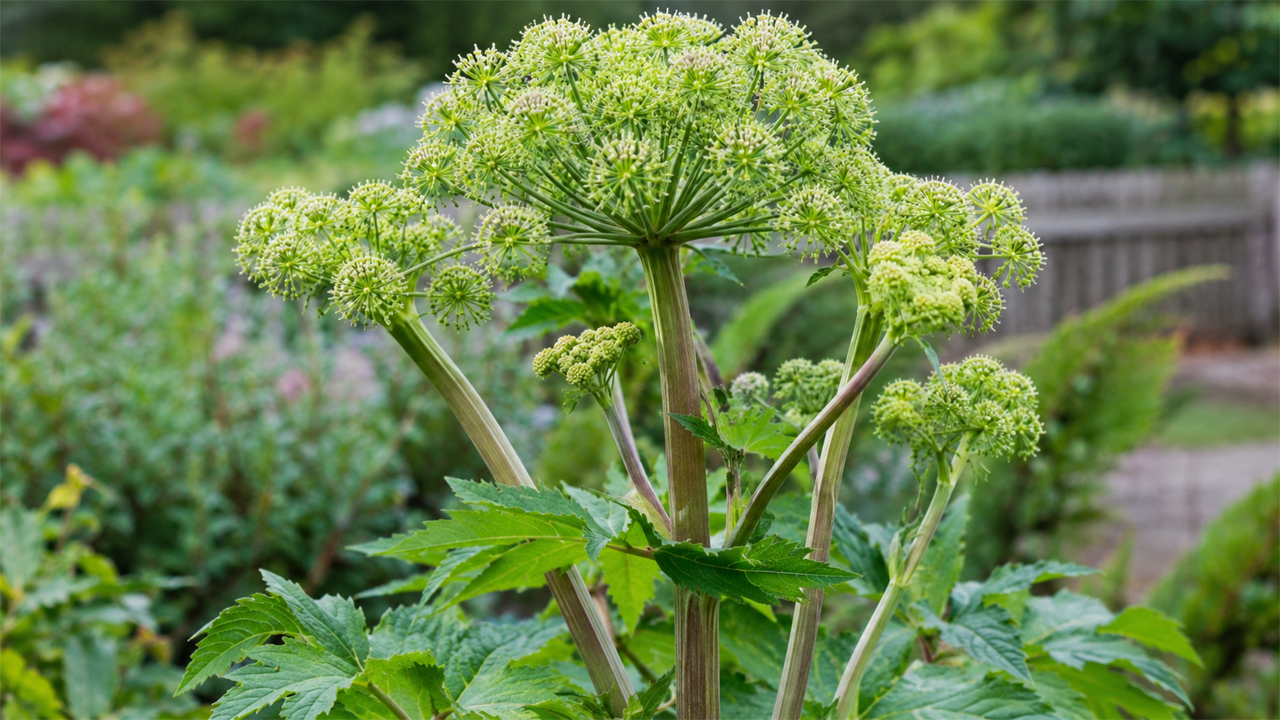
Archangelica, commonly known as garden angelica or angelica, is an impressive herbaceous plant valued for its tall stems, large green leaves, and beautiful clusters of tiny greenish-white flowers. The species most commonly grown in gardens is Angelica archangelica, a biennial or short-lived perennial plant belonging to the Apiaceae family. This family also includes carrots, celery, parsley, and fennel.
Angelica can become a striking feature in cottage gardens, herb gardens, and naturalistic landscapes. Under suitable conditions, it can grow several feet tall, producing sturdy stems and broad, divided leaves that create a lush appearance. Its rounded flower clusters attract pollinators, making it useful for gardeners who want to encourage biodiversity.
Although angelica looks dramatic, it does not require complicated care when planted in the right location. Consistent moisture, fertile soil, and suitable light are the main requirements for healthy growth. Understanding its growing habits also helps gardeners decide when to sow seeds, how much water to provide, and how to maintain the plant throughout its life cycle.
Choosing the Right Location for Angelica
Selecting an appropriate planting location is one of the most important steps in growing healthy angelica. The plant naturally prefers cool, moist environments where the soil remains fertile and does not dry out completely. A garden bed with morning sunlight and some afternoon shade is often an excellent choice, particularly in regions with warm summers.
Angelica can also grow in full sun in cooler climates, provided the soil retains sufficient moisture. In warmer areas, partial shade helps protect its leaves from excessive heat and reduces the risk of wilting during the hottest part of the day.
Because mature plants can become large, choose a location with enough room for their height and spreading foliage. Avoid placing angelica where it will block smaller plants or compete with delicate flowers for sunlight. A position toward the back of a garden bed works well, allowing the plant to become a natural focal point.
Good air circulation is beneficial because it helps foliage dry after rain or watering. However, the location should not be so exposed that strong winds repeatedly damage its tall flowering stems.
Understanding Soil Requirements
Angelica grows best in deep, fertile soil that holds moisture while allowing excess water to drain away. Loamy soil rich in organic matter provides a suitable balance between water retention and drainage. Heavy clay soil can also support growth if it is improved to prevent persistent waterlogging.
Before planting, loosen the soil and incorporate mature compost or well-rotted organic matter. This improves soil structure, supports beneficial organisms, and supplies nutrients for developing roots and foliage.
The plant generally tolerates slightly acidic to neutral soil, although good soil structure and consistent moisture are more important than achieving an exact pH level in most home gardens.
Avoid planting angelica in compacted ground where water collects around the roots. Although it enjoys moist conditions, permanently saturated soil can encourage root problems and weaken the plant.
A layer of organic mulch around the base can help retain moisture, regulate soil temperature, and reduce weed growth. Keep the mulch slightly away from the crown of the plant to prevent excessive moisture from accumulating around the central growing point.
How to Plant Archangelica Seeds
Growing angelica from seed is a practical way to establish new plants. Fresh seeds generally offer the best results because angelica seeds can lose viability during storage. Sow them soon after harvesting whenever possible, or obtain fresh seed from a reliable garden supplier.
Angelica seeds often germinate better after experiencing a period of cold conditions. In many climates, sowing fresh seeds outdoors in autumn allows natural winter temperatures to provide this process. Spring sowing is also possible, although stored seeds may benefit from an appropriate period of cold stratification according to the seed supplier’s instructions.
Prepare a seedbed or container filled with moist, well-draining seed-starting compost. Scatter the seeds over the surface and cover them lightly with a thin layer of compost. Avoid burying them too deeply because this can interfere with germination.
Keep the growing medium consistently moist but never waterlogged. Place containers in a bright location away from intense direct sunlight, and protect outdoor seedbeds from heavy rain that could wash seeds away.
Germination can be irregular, so patience is important. Once seedlings develop several true leaves and become strong enough to handle, transplant them carefully into their permanent positions. Allow sufficient space between plants, considering the mature size of the variety being grown.
Watering Angelica for Healthy Growth
Regular watering is essential for angelica because its large leaves can lose moisture quickly, especially during warm or windy weather. The goal is to maintain evenly moist soil without allowing the roots to sit in standing water.
Check the soil regularly by feeling the surface and the upper layer beneath it. If the soil begins to dry, water thoroughly around the root zone. During dry spells, newly planted angelica may need more frequent watering than established plants.
Watering early in the morning is generally beneficial because it allows the plant to absorb moisture before temperatures rise. Direct water toward the soil rather than repeatedly wetting the foliage, particularly when air circulation is limited.
Mulching can reduce how often watering is necessary by slowing evaporation. However, do not rely on mulch alone during prolonged hot weather. Containers may dry out more quickly than garden beds, so check them frequently.
Yellowing leaves, wilting, or slow growth can indicate moisture problems, although these symptoms may also result from poor drainage, nutrient deficiencies, or other growing conditions. Check the soil before increasing watering, as adding more water to already saturated ground can make the problem worse.
Providing Nutrients for Strong Growth
Angelica benefits from fertile soil, particularly during its first year when it develops the roots and foliage needed for future flowering. Adding compost before planting provides a useful foundation for steady growth.
A light application of balanced organic fertiliser during active growth may be helpful if the soil is poor or the plant shows signs of nutrient deficiency. Follow the product instructions carefully and avoid excessive fertilisation.
Too much nitrogen can encourage abundant leafy growth at the expense of balanced development. It may also produce softer growth that is more vulnerable to damage.
Organic mulch can gradually improve soil fertility as it decomposes. Replenish it when necessary, while keeping the crown clear.
In reasonably fertile garden soil, angelica often grows well without frequent additional feeding. Observe the plant’s overall condition and adjust care according to its needs rather than applying fertiliser automatically throughout the growing season.
Pruning and General Maintenance
Angelica generally requires little pruning while it is growing. Remove damaged, diseased, or badly yellowed leaves when necessary to keep the plant tidy and improve airflow.
During its life cycle, angelica commonly produces a rosette of foliage before developing a tall flowering stem. Many plants flower in their second year, although flowering time depends on growing conditions and the individual plant.
Once the flowering stems emerge, they can become tall and heavy. Planting angelica in a sheltered location usually reduces the need for support. If strong winds are common, a discreet stake may help prevent stems from bending or breaking.
After flowering, the plant may produce seeds and then decline, particularly if it is behaving as a biennial. Gardeners who want to encourage self-seeding can allow some flower heads to mature before collecting or dispersing the seeds.
Remove unwanted seedlings before they become established, especially if the plant is growing in a small garden. If you want a continuing display, sow fresh seeds periodically rather than relying on a single plant to survive indefinitely.
Common Pests and Growing Problems
Angelica is generally straightforward to grow, but unsuitable conditions can lead to several problems. Aphids may gather on tender shoots and flower stems, feeding on plant sap and sometimes causing distorted growth. Small infestations can often be removed with a gentle stream of water.
Encouraging beneficial insects and maintaining garden diversity can help keep pest populations under control. Avoid unnecessary pesticide use, particularly when angelica is flowering and attracting pollinators.
Fungal diseases may develop when foliage remains wet for extended periods or plants grow in poorly ventilated locations. Providing adequate spacing, watering at soil level, and removing diseased material can help reduce the risk.
Poor growth may also result from insufficient moisture, depleted soil, or excessive heat. Check growing conditions before assuming the plant has a disease.
One important precaution concerns identification. Angelica belongs to a plant family that includes highly poisonous species, such as poison hemlock. Do not consume wild plants or use angelica medicinally unless the species has been positively identified by a qualified expert. Some people may also experience skin irritation after handling angelica, particularly when skin exposed to its sap is subsequently exposed to sunlight. Wear gloves when pruning or handling damaged stems.
Seasonal Care and Winter Protection
Angelica usually tolerates cold weather better than prolonged heat, especially when growing in suitable soil. In autumn, remove damaged foliage and apply a light layer of organic mulch around the root area. This helps protect the soil from temperature fluctuations while preserving moisture.
Avoid covering the crown with thick, wet mulch because excessive moisture can encourage rot. In areas with harsh winters, a sheltered location and well-drained soil are particularly important.
During spring, check the plant for new growth, remove damaged material, and replenish mulch if necessary. Resume regular watering as temperatures rise and active growth begins.
In summer, pay particular attention to moisture levels. Angelica may struggle in intense heat or prolonged drought, so provide afternoon shade where practical and water when the soil begins to dry.
Seasonal care should reflect local weather rather than a rigid calendar. Plants grown in cool climates may remain vigorous for longer than those exposed to hot summers.
Conclusion
Growing Archangelica successfully begins with choosing a suitable location, preparing fertile soil, and maintaining consistent moisture. With enough space, appropriate light, and regular observation, angelica can develop into a tall, leafy garden feature with distinctive flower clusters that attract pollinators.
Fresh seeds, careful transplanting, sensible watering, and occasional maintenance are usually sufficient to support healthy growth. Gardeners should also understand the plant’s life cycle, as many angelica plants flower in their second year and then decline.
By balancing moisture with good drainage and protecting the plant from excessive heat, you can enjoy its architectural foliage and natural beauty in a range of garden settings. With thoughtful care and safe plant identification, angelica can become a rewarding addition to a herb garden, cottage garden, or wildlife-friendly landscape.
