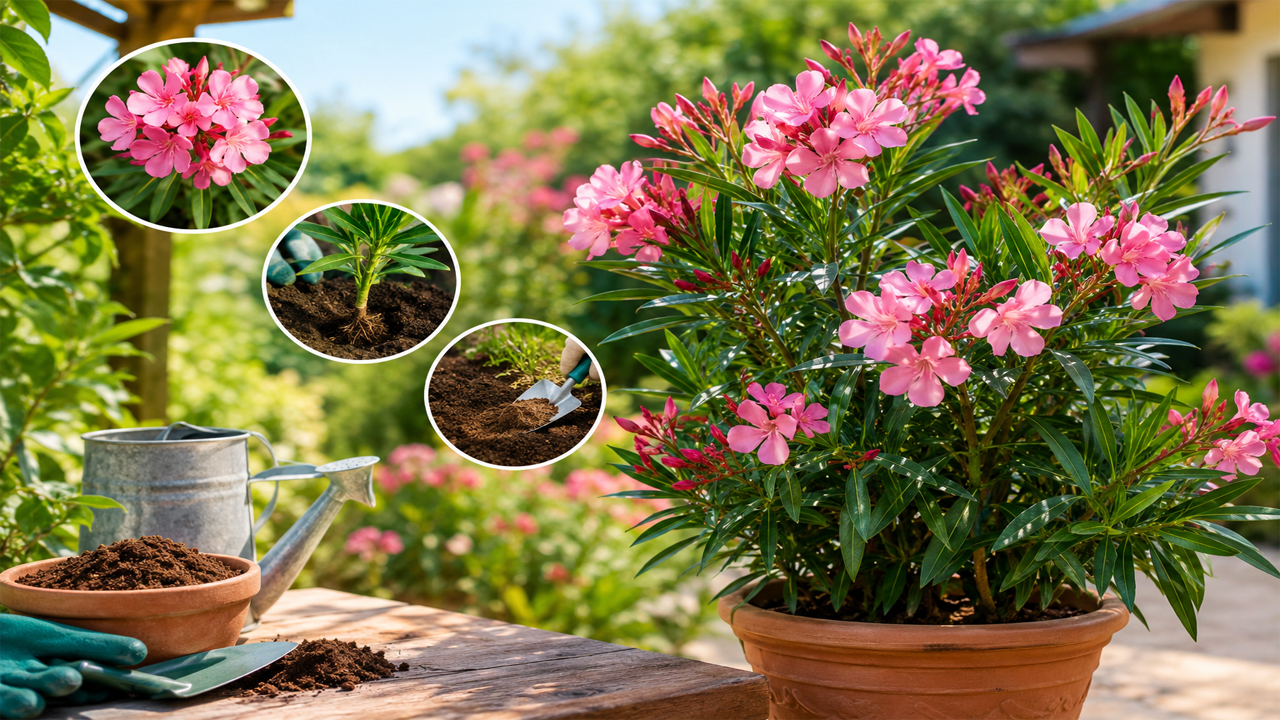
Oleander is a beautiful flowering shrub known for its colourful blossoms, evergreen leaves, and ability to thrive in warm, sunny conditions. With flowers ranging from pink and white to red and yellow, it can bring a vibrant, Mediterranean feel to gardens, patios, and outdoor spaces. Its impressive appearance and tolerance for heat make it a popular choice for gardeners who want long-lasting colour without constant maintenance.
Although oleander is relatively easy to grow once established, choosing the right location, providing suitable soil, and following a consistent watering routine will help it produce healthier foliage and more abundant flowers. Understanding its growing requirements is also essential because every part of the oleander plant is highly poisonous.
Choosing the Right Location for Oleander
Sunlight is one of the most important factors in growing a healthy oleander. This shrub performs best in a location that receives at least six hours of direct sunlight each day. Plenty of sunshine encourages vigorous growth and supports the development of colourful flowers throughout the warmer months.
Oleander grows particularly well in warm climates and is often planted along garden borders, fences, driveways, and sunny patios. Once established, it can tolerate heat and periods of dry weather better than many flowering shrubs. However, prolonged exposure to strong winds may damage its branches and flowers, so a sheltered position is preferable where possible.
Before planting, consider the shrub’s mature size. Depending on the variety and growing conditions, oleander can become a large, spreading plant. Leaving sufficient space around it allows air to circulate, makes maintenance easier, and prevents it from overcrowding nearby plants.
How to Plant Oleander Successfully
The best time to plant oleander is generally during spring or early autumn in areas with mild weather. Planting when temperatures are moderate gives the roots an opportunity to establish themselves before extreme heat or cold arrives.
Choose a site with well-draining soil and dig a hole approximately twice as wide as the root ball. The hole should be deep enough to accommodate the roots without burying the base of the stem. Place the plant in the hole, backfill with the original soil, and gently firm the ground around the roots.
Water thoroughly after planting to help settle the soil and remove large air pockets. During the first growing season, monitor the soil regularly and water whenever the upper layer begins to dry. Avoid leaving the roots in waterlogged soil, as excessive moisture can cause root problems.
If you are planting several oleander shrubs, leave enough room between them for their expected mature width. This helps maintain a healthier garden and makes pruning and watering more convenient.
The Best Soil for Healthy Growth
Oleander adapts to a range of soil types, including sandy and moderately poor soils, provided that excess water can drain away. A well-draining growing medium is particularly important because continuously wet roots can weaken the plant and increase the risk of disease.
For garden planting, ordinary garden soil may be suitable if it drains freely. Heavy clay soil can be more challenging because it retains moisture for long periods. Improving drainage before planting is preferable to repeatedly trying to correct problems later.
Oleander can also grow successfully in containers. Use a high-quality potting mix designed for outdoor shrubs, together with a pot that has adequate drainage holes. Avoid compacting the growing medium too firmly, as roots need both moisture and air to develop properly.
Watering Oleander the Right Way
Although established oleander plants are drought-tolerant, they still benefit from appropriate watering, especially during prolonged hot weather. Newly planted shrubs need more regular attention while their roots are developing.
Water deeply rather than giving the plant frequent, shallow amounts. This encourages moisture to reach the root zone and helps the plant develop a stronger root system. Before watering again, check the soil to determine whether it has begun to dry.
Container-grown oleander usually requires more frequent watering than plants growing directly in the ground because pots dry out faster. During hot summer weather, check containers regularly and adjust your watering routine according to the temperature, pot size, and soil condition.
Yellowing leaves and persistently wet soil may indicate overwatering or poor drainage. On the other hand, wilting and dry soil can signal that the plant needs water. Checking the growing medium is more reliable than following a rigid watering schedule.
Fertilising for More Beautiful Flowers
Oleander generally does not require heavy feeding when planted in reasonably fertile soil. However, a balanced fertiliser can support healthy growth when the plant is growing in poor soil or a container.
Apply a suitable slow-release fertiliser during the active growing season, following the manufacturer’s instructions. Container plants may need occasional feeding because nutrients gradually wash out during watering.
Avoid excessive fertiliser, particularly products containing large amounts of nitrogen. Too much nitrogen can encourage leafy growth at the expense of flowering. Feeding late in the growing season is also best avoided in regions where winter temperatures can damage new growth.
Healthy foliage, steady growth, and regular flowering are better indicators of success than simply applying more fertiliser.
Pruning Oleander for Shape and Growth
Pruning helps oleander maintain an attractive shape, removes damaged branches, and prevents the shrub from becoming too crowded. The most suitable time depends on the local climate and the plant’s flowering cycle, but light pruning after flowering is often a practical approach.
Remove dead, broken, or diseased branches using clean, sharp pruning tools. You can also shorten excessively long stems to maintain the desired size and shape. Avoid removing too much growth at once, as heavy pruning may reduce flowering in the following season.
Oleander sap is poisonous, so wear protective gloves, long sleeves, and eye protection when pruning. Wash your hands and tools thoroughly afterwards, and never burn oleander cuttings because the smoke can be toxic. Keep removed branches away from children, pets, and livestock.
Common Oleander Problems and How to Prevent Them
Oleander is generally resilient, but it can still experience problems caused by pests, disease, and unsuitable growing conditions. Aphids, scale insects, and spider mites may occasionally affect the foliage, particularly during warm weather.
Inspect leaves and stems regularly for unusual spots, discolouration, sticky residue, or visible insects. Address small infestations promptly with an appropriate treatment suitable for ornamental plants, following all safety instructions.
Poor drainage can contribute to root problems, while inadequate sunlight may reduce flowering. In some regions, oleander leaf scorch, a bacterial disease spread by certain insects, can cause leaves and branches to dry out. Affected growth may not recover, so seek local horticultural advice if symptoms persist.
Good drainage, adequate sunlight, sensible watering, and regular inspection can prevent many common problems before they become serious.
Growing Oleander in Pots
Oleander can be an excellent container plant for sunny balconies, terraces, and patios. Select a sturdy pot with drainage holes and enough room for the root system to develop. Larger containers provide better stability and generally retain moisture longer than small pots.
Position the container where the plant receives plenty of sunlight. Water when the soil begins to dry, and ensure that excess water can escape freely. Repot when roots become crowded or growth slows noticeably, choosing a slightly larger container rather than one that is unnecessarily oversized.
In colder climates, container-grown oleander may need protection from frost. Move the pot to a sheltered location when appropriate, while maintaining good light and avoiding excessive watering during cooler weather.
Important Safety Precautions When Growing Oleander
Oleander is highly toxic if ingested, and all parts of the plant contain poisonous compounds. Never eat its leaves, flowers, seeds, or stems, and do not use any part of the plant in homemade remedies or teas.
Wear gloves when pruning or handling cuttings, avoid contact between plant sap and your eyes or mouth, and wash your hands afterwards. Keep the shrub away from areas where young children or pets might chew the foliage. Do not use oleander branches as cooking skewers or firewood, and never burn the plant.
If someone swallows any part of an oleander plant, seek urgent medical advice or contact your local poison information service. Do not wait for symptoms to develop.
Conclusion
Growing oleander successfully is straightforward when you provide plenty of sunlight, well-draining soil, sensible watering, and occasional pruning. Once established, this attractive shrub can produce colourful flowers for much of the warm season while tolerating conditions that challenge many other ornamental plants.
Whether planted in a garden border or grown in a large container, oleander can become a striking feature in an outdoor space. Pay attention to its mature size, monitor its growing conditions, and avoid excessive watering or fertilising. Most importantly, handle the plant responsibly because of its serious toxicity. With suitable care and sensible precautions, oleander can remain a beautiful and long-lasting addition to a garden.
