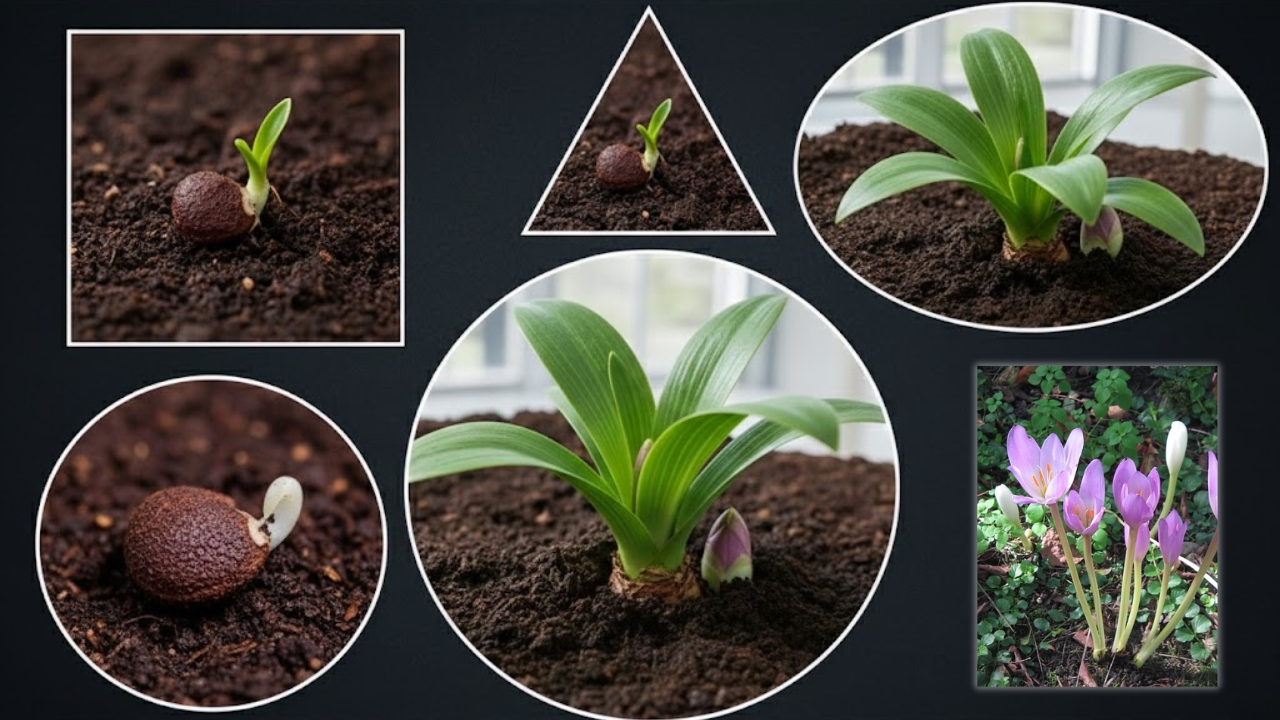
Colchicum, often referred to as autumn crocus, is a fascinating bulbous plant that blooms in late summer or autumn when most gardens are winding down. Known scientifically as colchicum autumnale, this plant is admired for its delicate lilac, pink, or white flowers that resemble crocuses, though they belong to a different botanical family. Gardeners prize the autumn crocus plant for its ability to bring color to the garden during cooler months. Varieties such as colchicum waterlily, colchicum lilac wonder, colchicum album, and colchicum rosy dawn are popular choices, each offering unique foliage and flower forms.
Understanding Colchicum Autumnale
Colchicum autumnale, sometimes spelled cholchicum autumnale, cochicum autumnale, or even colchichum autumnale, is native to Europe and parts of Asia. It thrives in meadows, woodland edges, and moist soils. The plant produces colchicum leaves in spring, which later die back, leaving the bulbs dormant until autumn. When the season turns, the flowers emerge without foliage, creating a striking display. Gardeners often confuse crocus autumnale or crocus colchicum autumnale with true crocuses, but colchicum autumnale autumn crocus belongs to a different genus.
Choosing Colchicum Varieties
There are many colchicum varieties to explore. Colchicum waterlily is a double-flowered type with layered petals resembling a water lily autumn crocus. Colchicum the giant and colchium the giant produce large blooms that stand out in borders. Colchicum autumnale album offers pure white flowers, while pink autumn crocus and giant autumn crocus varieties add vibrant shades. Colchicum nancy lindsay and colchicum rosy dawn are admired for their soft pastel tones. Cyclamen colchicum and epimedium pinnatum colchicum combinations are sometimes used in woodland gardens for layered seasonal interest.
Planting Autumn Crocus Bulbs
Planting autumn crocus requires attention to timing and soil preparation. Colchicum bulbs, also called colchicum corms or colchicum tubers, should be planted in late summer to early autumn. The ideal depth is about 10–15 cm, with spacing of 20 cm to allow for natural spreading. Well-drained soil enriched with organic matter ensures healthy growth. Gardeners often ask about autumn crocus when to plant, and the answer is before the first autumn rains, so the bulbs can establish roots before flowering. Colchicum waterlily planting follows the same guidelines, though larger bulbs may need deeper placement.
Soil and Location Requirements
Colchicum plant thrives in fertile, moist but well-drained soil. Heavy clay should be improved with compost or grit. A sunny or partially shaded location is best, as colchicum foliage appears in spring and needs light to photosynthesize. Colchicum autumnale plant adapts well to borders, rock gardens, and naturalized areas. Colchium plantings near shrubs or trees can create a woodland effect. Epimedium pinnatum subsp colchicum and epimedium thunderbolt are companion plants that complement colchicum’s seasonal rhythm.
Seasonal Growth Cycle
The growth cycle of colchicum is unique. In spring, colchicum leaves emerge, often broad and lush, before dying back in early summer. The bulbs remain dormant until autumn, when colchicum flower stalks rise suddenly from the soil. This autumn blooming crocus effect surprises many gardeners. Autumn crocus foliage is absent during flowering, which makes the blossoms appear even more dramatic. Colchicum autumnale leaves are important for storing energy in the bulbs, so they should not be cut prematurely.
Caring for Colchicum Plants
Colchicum care involves minimal effort once established. Regular watering during spring leaf growth supports healthy bulbs, but avoid waterlogging. Mulching helps retain moisture and suppress weeds. Colchicum foliage should be allowed to die back naturally. Fertilizing with a balanced bulb feed in spring strengthens the corms. Colchicum rhs guidelines recommend lifting and dividing colchiums every few years to prevent overcrowding. Colchicum varieties such as colchicum white or colchicum lilac wonder benefit from division to maintain vigor.
Propagation of Colchicum
Propagation is usually done by dividing colchicum corms. After the foliage has died back, bulbs can be lifted and separated. Replanting colchium giant or colchicum the giant bulbs ensures continued flowering. Colchicum autumnale for sale often comes as dormant bulbs ready for planting. Gardeners can also propagate colchicum waterlily or colchicum album by bulb division. Seed propagation is possible but slow, often taking several years before flowering.
Common Challenges and Solutions
Colchicum plants are generally hardy, but slugs and snails may damage young foliage. Good garden hygiene and organic deterrents help. Overcrowding can reduce flowering, so colchicum corms should be divided regularly. Poor drainage may cause bulbs to rot, so raised beds or sandy soil amendments are recommended. Colchicum foliage should not be cut too early, as this weakens the bulbs.
Medicinal and Historical Significance
Colchicum autumnale has long been known for its medicinal properties. The compound colchicine autumnale, derived from autumn crocus colchicine, has been used historically to treat gout and other conditions. However, colchicum plant parts are toxic if ingested, so caution is essential. Indian colchicum and other regional species have similar traditional uses. Despite its toxicity, colchicum flower remains a symbol of resilience and seasonal beauty.
Designing with Colchicum in the Garden
Colchicums the autumn crocus are versatile in garden design. They can be planted in drifts across lawns, borders, or woodland edges. Water lily crocus varieties create a dramatic focal point. Colchicum giant zimowit bizantyjski and zimowit lilac wonder are striking in large plantings. White waterlily colchicum and colchicum rosy dawn add elegance to mixed beds. Pairing colchicum with epimedium pinnatum thunderbolt or cyclamen colchicum enhances seasonal interest.
Buying and Availability
Gardeners can find colchicums for sale at nurseries and bulb suppliers. Colchicum autumnale for sale is common in late summer. Specialty varieties such as colchicum nancy lindsay, colchicum lilac wonder, and colchicum waterlily are often available through bulb catalogs. Colchicum d, colchicum d4, and colchicum d 4 are sometimes referenced in homeopathic contexts, while colchicum 0 5, colchicum 5 ch, and colchicum 5ch appear in herbal traditions. For ornamental gardening, focus on healthy bulbs from reputable sources.
Conclusion
Growing colchicum autumnale, the autumn crocus plant, is a rewarding experience for gardeners seeking late-season color. With varieties ranging from colchicum waterlily to colchicum the giant, there is a type suited to every garden. Proper planting, care, and propagation ensure that colchicum bulbs thrive year after year. Whether choosing pink autumn crocus, white waterlily colchicum, or colchicum lilac wonder, these autumn blooming crocus plants bring elegance and surprise to the garden. By respecting their seasonal cycle and providing the right conditions, gardeners can enjoy the timeless beauty of colchicum flowers each autumn.
