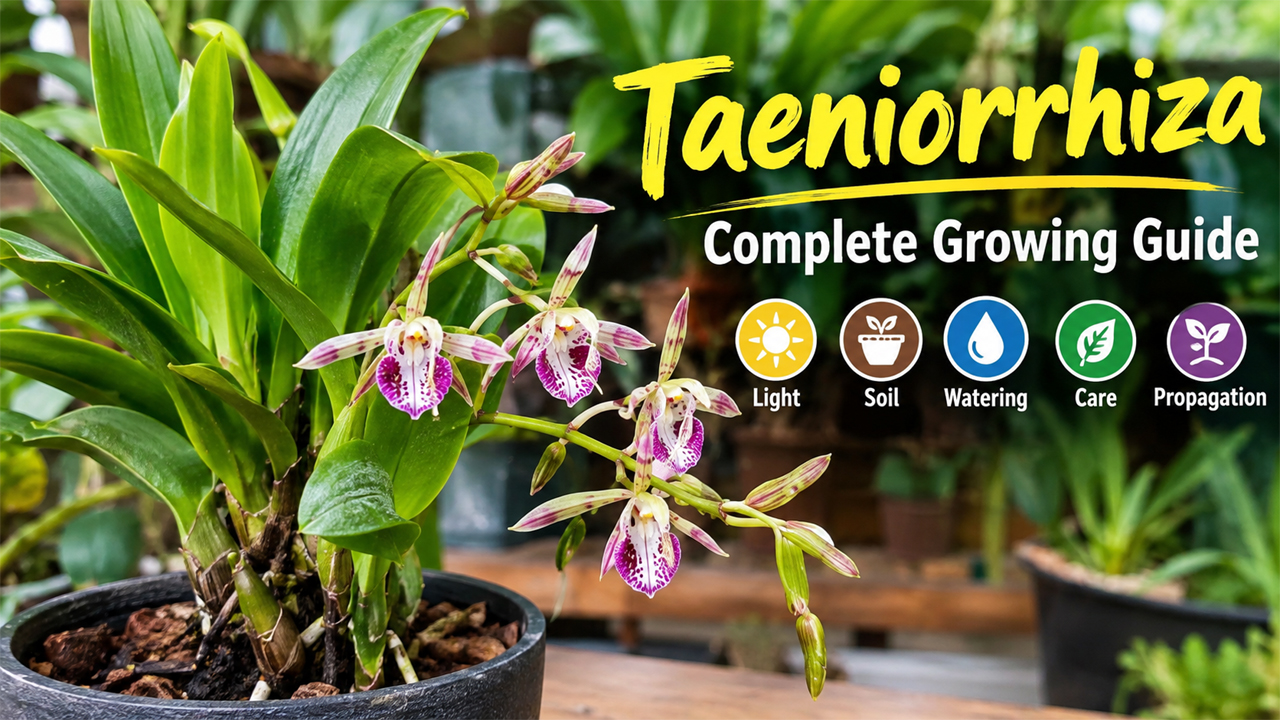
Taeniorrhiza is a distinctive and relatively uncommon orchid genus that can be an interesting addition to a collection for growers who enjoy unusual plants. Like many orchids, it rewards careful attention to its growing environment rather than frequent heavy watering or rich garden soil. Successful cultivation depends on understanding its natural growth habits and recreating suitable conditions at home.
Because Taeniorrhiza is not as commonly cultivated as popular orchids such as Phalaenopsis or Dendrobium, reliable care begins with observation. The plant should be grown in a clean, airy environment with appropriate light, moisture, humidity, and drainage. Once these basic conditions are balanced, Taeniorrhiza can establish steadily and produce healthy new growth.
Choosing the Right Growing Location
The location you choose has a major influence on the health of Taeniorrhiza. A bright position with filtered or indirect light is generally more suitable than a dark corner or a place exposed to intense midday sunlight. An east-facing window can provide useful morning light, while a bright area protected by a sheer curtain can work well indoors.
Good air circulation is equally important. Orchids generally perform better when air can move gently around their leaves and growing medium. Stagnant, humid conditions can encourage fungal and bacterial problems, particularly when the plant remains wet for long periods.
If the plant is grown outdoors, place it somewhere protected from strong afternoon sun, heavy rain, and harsh winds. A shaded balcony, covered patio, greenhouse, or sheltered garden structure can provide a more controlled environment.
Understanding Light Requirements
Light is one of the most important factors for healthy Taeniorrhiza growth. The plant needs enough light to support photosynthesis and new growth, but excessive direct sunlight can scorch the foliage and cause stress.
Aim for bright, filtered light for much of the day. If the leaves become pale, yellowish, or develop dry brown patches, the plant may be receiving too much intense light. On the other hand, very dark green leaves combined with weak or slow growth can indicate insufficient light.
Indoor growers should gradually introduce plants to brighter conditions rather than moving them suddenly from shade into strong sunlight. If artificial lighting is necessary, a suitable plant-growing light can supplement natural daylight, especially during periods when the plant receives little sunlight.
Selecting the Best Pot and Growing Medium
Taeniorrhiza should be grown in a medium that provides excellent drainage and plenty of air around the roots. Ordinary garden soil is usually unsuitable for orchids because it can remain wet and compacted around the roots.
A loose orchid-style mixture containing materials such as fine or medium-grade bark, sphagnum moss, perlite, charcoal, or other suitable airy components can provide better conditions. The exact mixture can be adjusted according to the growing environment. In a humid location, a more open and well-draining mixture may be preferable, while a drier indoor environment may benefit from a medium that retains a little more moisture.
Choose a pot with adequate drainage holes. The container should not be excessively large because a large volume of growing medium can stay wet for too long after watering. Repotting is generally best performed when the plant is actively producing new roots or growth and when the existing medium has begun to break down.
Watering Taeniorrhiza Properly
Watering is one of the easiest areas in which orchid growers can make mistakes. Rather than following a rigid daily schedule, observe the growing medium, roots, temperature, humidity, and overall plant condition.
Water thoroughly when the plant needs moisture, allowing excess water to drain completely from the container. Never allow the pot to sit continuously in stagnant water. Between waterings, the growing medium should have an opportunity to become less saturated.
During warm and actively growing periods, Taeniorrhiza may require more frequent watering. During cooler periods or when growth slows, watering can usually be reduced. Plants grown in sphagnum moss may need a different watering routine from those grown in bark because moss can retain moisture for considerably longer.
Using clean water is helpful, particularly if your local water supply contains high levels of minerals. Avoid repeatedly leaving water trapped around the crown or between leaves, especially in cool conditions.
Maintaining Suitable Humidity
Humidity can contribute significantly to healthy orchid growth, but high humidity should always be balanced with good ventilation. Taeniorrhiza should not be kept in a permanently stagnant and excessively wet environment.
Moderate to high humidity can be beneficial, particularly when temperatures are warm. If the surrounding air is very dry, a humidifier can help maintain a more stable environment. Another option is to group plants together so that natural moisture released by the plants creates a slightly more humid microclimate.
Humidity trays can also be used, but the bottom of the orchid pot should remain above the water rather than sitting directly in it. Good airflow should continue around the plant so that moisture does not remain trapped on the foliage.
Temperature and Seasonal Care
Taeniorrhiza should be protected from extreme temperature changes. A stable growing environment generally makes it easier for the plant to maintain healthy roots and foliage.
Avoid placing the plant directly beside heating equipment, air-conditioning vents, or drafty doors and windows. Very hot conditions can increase water loss, while cold and continuously wet conditions can place stress on the roots.
Seasonal changes should influence watering and care. During periods of active growth, provide suitable light, moisture, and nutrition. When growth slows, avoid trying to compensate with excessive watering or fertilizer. Adjust the care routine according to the plant’s actual condition.
Feeding and Fertilizing Taeniorrhiza
Taeniorrhiza can benefit from regular but moderate feeding during active growth. A balanced orchid fertilizer used at an appropriate diluted strength is generally more suitable than applying a strong fertilizer solution.
It is safer to feed lightly and consistently than to apply excessive amounts at once. Too much fertilizer can lead to mineral accumulation around the roots and may damage sensitive root tissue.
Fertilization should also be reduced or paused when the plant is not actively growing. Watering the plant thoroughly from time to time can help flush accumulated fertilizer salts from the growing medium, provided the container drains freely.
Repotting and Root Care
Repotting becomes necessary when the growing medium has decomposed, drainage has declined, the container has become unsuitable, or the plant has outgrown its current space. Healthy roots are generally firm and should be handled carefully during repotting.
Remove old, broken-down material gently and inspect the roots. Any clearly dead or severely damaged portions can be removed with clean, sterilized cutting tools. Avoid unnecessarily disturbing healthy roots.
Place the plant securely in fresh, airy growing medium without burying sensitive growth points too deeply. After repotting, provide appropriate humidity and gentle light while the plant adjusts. Avoid keeping the newly repotted plant constantly saturated.
Propagating Taeniorrhiza
Propagation of Taeniorrhiza can be more challenging than growing common household orchids. Depending on the species and its growth structure, propagation may involve division or specialized orchid propagation techniques.
Division should only be considered when a mature plant has developed enough healthy growth to support separate sections. Each division needs appropriate roots and viable growth so that it can establish independently.
Seed propagation is considerably more specialized. Orchid seeds are extremely small and generally require carefully controlled conditions and specialized techniques to germinate and develop successfully. For most home growers, obtaining an established healthy plant is much more practical than attempting propagation from seed.
Common Growing Problems
Yellowing leaves, weak growth, root deterioration, and leaf spotting can all indicate that growing conditions need adjustment. Overwatering is one of the most common problems because roots need oxygen as well as moisture.
If roots remain wet for extended periods, they may deteriorate and become unable to support the plant properly. Improving drainage, increasing airflow, and adjusting the watering routine can help prevent further problems.
Leaf scorching usually indicates excessive direct sunlight or sudden exposure to intense light. Move the plant gradually into a more suitable filtered-light position. Pest problems should also be addressed early by regularly inspecting both sides of the leaves, new growth, and the growing medium.
Tips for Growing Taeniorrhiza Successfully
The most effective approach to growing Taeniorrhiza is consistency. Provide bright filtered light, an airy growing medium, appropriate humidity, good ventilation, and careful watering. Avoid making frequent dramatic changes to the plant’s environment.
Observe the plant regularly instead of depending entirely on a calendar-based routine. New roots and shoots are signs of active growth, while deteriorating roots, persistent wetness, leaf damage, or stalled growth indicate that conditions may need adjustment.
Patience is particularly important with uncommon orchids. Taeniorrhiza may not respond immediately after a change in conditions, and recovery from root problems can take time. Giving the plant stable conditions allows it to establish naturally.
Final Thoughts
Growing Taeniorrhiza successfully requires an understanding of balance. The plant needs moisture but also oxygen around its roots, humidity but also airflow, and bright light without excessive exposure to harsh direct sun.
With the right container, airy growing medium, careful watering, suitable light, moderate humidity, and thoughtful seasonal care, Taeniorrhiza can become a rewarding plant for an experienced orchid grower. Rather than treating it like a conventional houseplant, focus on recreating a clean, airy, well-drained growing environment and responding to the plant’s needs as they change.
Once these fundamentals are established, caring for Taeniorrhiza becomes much more straightforward. Regular observation, patience, and consistent care are the keys to maintaining healthy growth and encouraging the plant to thrive over the long term.
