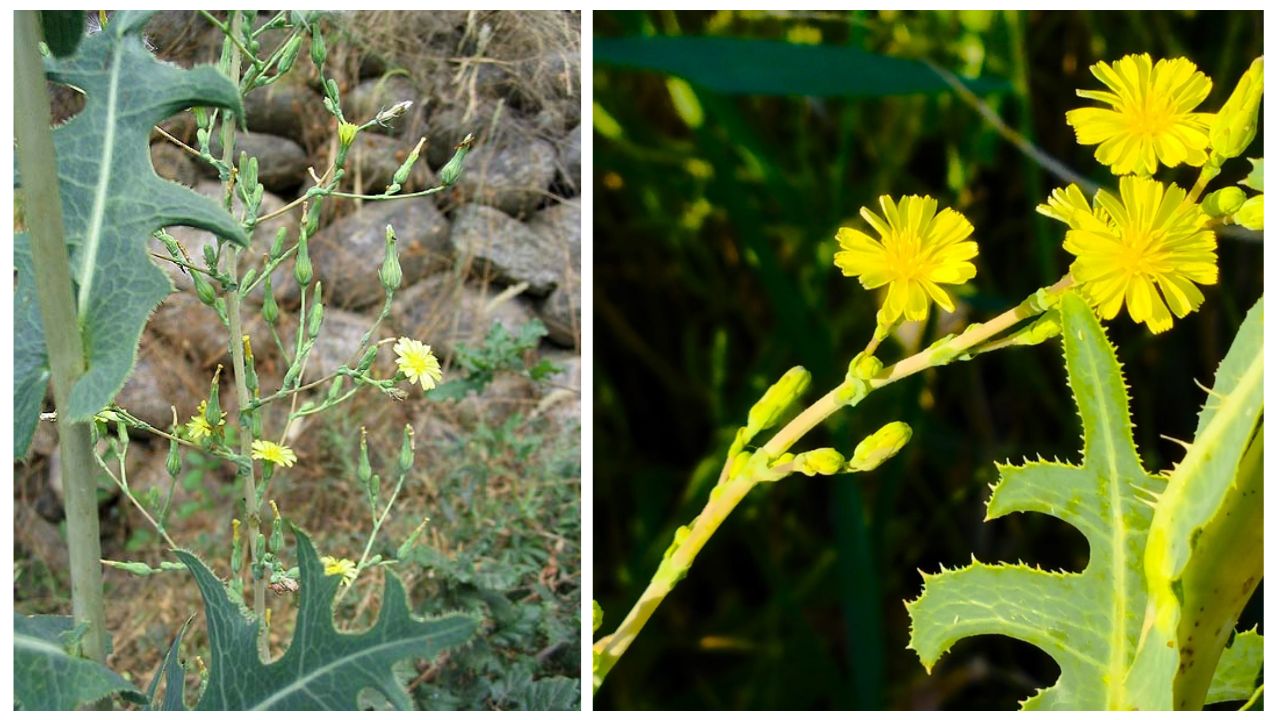
Lactuca serriola, commonly known as prickly lettuce, wild lettuce, or compass plant, is a hardy biennial plant belonging to the same broad botanical family as cultivated lettuce. It is recognized by its upright growth, deeply lobed leaves, prickly leaf edges and pale yellow flowers. Unlike garden lettuce, which is usually grown as a tender leafy vegetable, Lactuca serriola develops into a tall, sturdy plant and can tolerate relatively dry and poor growing conditions.
The plant generally produces a leafy rosette during its first year. During the second year, it sends up a tall flowering stalk, produces numerous small yellow flower heads and eventually develops seeds. Its ability to tolerate different soils and limited moisture makes it relatively easy to grow, although gardeners should consider its vigorous self-seeding habit before planting it.
Choosing the Right Location
Lactuca serriola grows best in a sunny location where it receives several hours of direct sunlight each day. Full sun encourages stronger stems, healthier leaves and better flowering during the mature stage. It can tolerate some light shade, but plants grown with insufficient sunlight may become taller and weaker as they reach toward available light.
Choose a location with good air circulation and enough space for the plant to develop vertically. Because mature plants can become considerably taller than ordinary lettuce, placing them toward the back of a garden bed or in an area where their natural growth will not interfere with smaller vegetables can be useful.
Preparing the Soil for Planting
Prickly lettuce is not particularly demanding about soil, but good drainage is important. A loose, moderately fertile soil allows young roots to establish quickly while preventing excessive water from remaining around the root system.
Before planting, loosen the soil to a depth of several inches and remove large stones, weeds and compacted material. Adding a modest amount of mature compost can improve soil structure and provide nutrients, especially when the existing soil is sandy or depleted. Avoid creating an excessively rich growing medium because Lactuca serriola is naturally capable of growing in relatively poor conditions.
A soil that drains easily while retaining some moisture is generally suitable. If the soil remains wet for long periods after watering or rain, improve drainage before sowing.
Starting Lactuca serriola From Seed
Growing Lactuca serriola from seed is the simplest propagation method. Sow the seeds directly where the plants are intended to grow, because young seedlings can be delicate when transplanted.
Prepare the surface of the soil and scatter the seeds thinly. Cover them with only a very light layer of fine soil, as deep planting can make germination more difficult. Keep the surface consistently moist while the seeds are germinating, but avoid soaking the area.
Germination can occur under suitable conditions within a relatively short period. Once seedlings appear, provide plenty of light and allow enough space between plants for proper development. If several seedlings emerge close together, thin them carefully so the strongest plants have sufficient room.
Watering Young and Established Plants
Consistent moisture is most important while newly planted seeds are germinating and seedlings are establishing their roots. Water gently whenever the upper layer of soil begins to dry, taking care not to wash away small seeds.
Once the plants become established, they are considerably more tolerant of dry conditions. Deep, occasional watering is generally more useful than frequent shallow watering. Allowing the soil surface to dry slightly between watering sessions can help prevent overly wet conditions.
During prolonged hot or dry weather, monitor the plants for signs of water stress such as drooping leaves or unusually slow growth. Although prickly lettuce is relatively drought tolerant, adequate moisture can support healthier foliage and more vigorous growth.
Sunlight, Temperature and General Care
Full sunlight is ideal for Lactuca serriola, particularly as the plant matures. Warm conditions encourage active growth, while the plant can also tolerate periods of cooler weather. Its natural hardiness allows it to survive in a variety of seasonal conditions.
Routine care is relatively simple. Remove competing weeds while plants are young, since weeds can compete for moisture, nutrients and sunlight. Once the plants become larger, their vigorous growth generally makes them less vulnerable to minor competition.
There is usually no need for elaborate pruning. If a mature plant becomes excessively tall or begins leaning, a simple support may help keep it upright. However, its natural upright form generally allows it to stand without assistance.
Feeding and Fertilizing Prickly Lettuce
Lactuca serriola generally does not require heavy feeding. If the soil was improved with compost before planting, additional fertilizer may not be necessary.
If plants appear weak or growth is unusually slow in poor soil, a balanced, mild fertilizer can be applied according to its product directions. Avoid excessive nitrogen because very heavy feeding can encourage rapid, soft growth rather than a naturally sturdy plant.
A healthy soil structure is often more important than frequent fertilizer applications. Compost and other well-decomposed organic matter can provide a gradual supply of nutrients while improving the soil’s ability to hold moisture and drain excess water.
Managing Weeds, Pests and Plant Problems
Young Lactuca serriola plants benefit from regular weed control. Remove weeds carefully around the seedlings without disturbing their developing roots. A thin organic mulch can also help reduce weed competition and slow moisture loss.
Like other leafy plants, prickly lettuce can occasionally attract insects that feed on foliage. Inspect leaves regularly for chewing damage, colonies of small insects or other unusual symptoms. Removing heavily affected leaves and maintaining good garden hygiene can help keep minor pest problems under control.
Avoid keeping the foliage constantly wet, particularly in poorly ventilated locations. Good spacing, adequate sunlight and well-drained soil can reduce conditions that encourage many common plant diseases.
Harvesting Young Leaves
If you intend to use Lactuca serriola as a leafy plant, harvesting is generally best done when the leaves are young and tender. Older leaves can become increasingly tough, bitter and prickly as the plant matures.
Select healthy young leaves and harvest them carefully rather than removing a large portion of the plant at once. Washing harvested leaves thoroughly is important before any culinary use.
The taste and texture of wild plants can differ significantly from cultivated lettuce. Because Lactuca serriola contains bitter latex and mature foliage can be unpleasantly tough, it is wise to use only correctly identified, young plant material and treat it as a wild edible rather than assuming it has the same qualities as garden lettuce.
Allowing the Plant to Flower and Produce Seed
Gardeners who want to collect seed can allow mature plants to complete their natural flowering cycle. During its second year, Lactuca serriola produces an upright flowering stalk with numerous small yellow flowers.
After flowering, the plant develops seed heads that eventually release lightweight seeds capable of being carried by wind. Collect seeds when the seed heads are mature and dry, before they disperse naturally.
Because the plant can readily reproduce from seed, collect unwanted flower heads before they mature if you do not want it spreading around the garden. This is particularly important in regions where Lactuca serriola is considered invasive or troublesome.
Harvesting and Storing Seeds
For seed collection, select healthy mature plants with good growth and allow the flower heads to dry naturally. Once the seeds are ready, collect them gently and separate them from remaining plant material.
Store completely dry seeds in a cool, dry location in a labeled airtight container. Keeping them away from moisture and excessive heat helps preserve their viability for future sowing.
Always confirm that growing and intentionally propagating Lactuca serriola is appropriate in your area. Since the plant can spread readily and behave as a weed, responsible seed management is an important part of cultivation.
Common Growing Mistakes to Avoid
One of the most common mistakes is planting the seeds too deeply. Small seeds generally perform better when placed near the soil surface and covered lightly. Overwatering is another problem, especially when the soil drains poorly.
Crowding young seedlings can also result in weak, poorly developed plants. Give seedlings enough room to grow and thin them when necessary. Excessive fertilizer is unnecessary and can lead to unbalanced growth.
Finally, do not allow mature plants to produce large quantities of seed unless you specifically want to propagate them. A single established plant can produce many wind-dispersed seeds, making unwanted spread difficult to control.
Final Tips for Growing Lactuca serriola Successfully
Lactuca serriola is a resilient wild lettuce species that can grow with relatively little attention when provided with sunlight, well-drained soil and sensible watering. Starting from seed, maintaining adequate space and controlling weeds during early growth are the main steps required for successful establishment.
For harvesting, young leaves are preferable because mature foliage becomes increasingly bitter and prickly. If the goal is seed production, allow the plant to complete its flowering cycle but manage the resulting seeds carefully. With responsible cultivation and regular observation, gardeners can successfully grow this distinctive wild lettuce while keeping its naturally vigorous growth under control.
