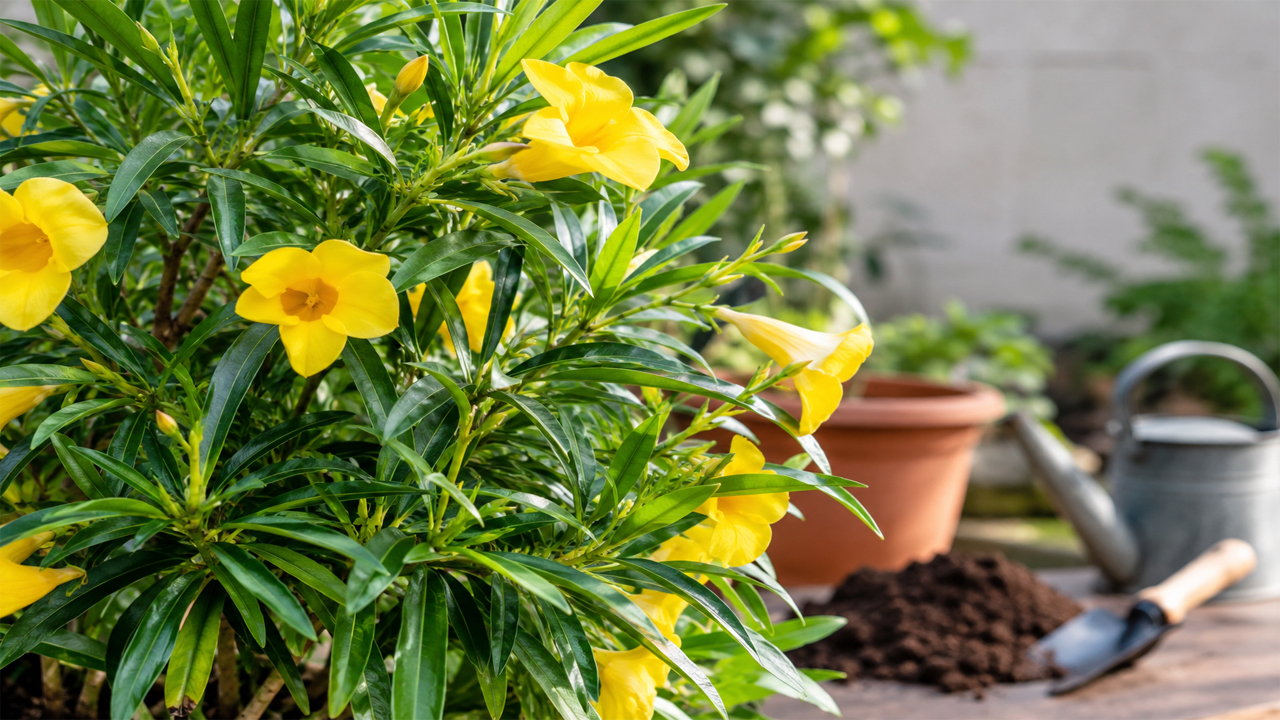
Thevetia is a beautiful tropical plant known for its glossy green leaves, attractive trumpet-shaped flowers and ability to thrive in warm climates. Commonly called yellow oleander, Thevetia peruviana is often grown in gardens, landscapes and large containers because of its ornamental appearance and relatively low maintenance requirements. With the right combination of sunlight, well-draining soil, careful watering and occasional pruning, this evergreen shrub can grow into an attractive feature in an outdoor space.
Although Thevetia is relatively easy to grow once established, it needs the right conditions to remain healthy and produce flowers consistently. Understanding its growing requirements can help gardeners avoid common problems and encourage strong, balanced growth throughout the growing season.
Understanding the Thevetia Plant and Its Growing Requirements
Thevetia is a tropical evergreen shrub or small tree that belongs to the Apocynaceae family. It is valued for its narrow, glossy leaves and bright yellow, funnel-shaped flowers, although some ornamental varieties may produce flowers in different shades. In suitable climates, the plant can grow several metres tall and develop a naturally attractive shape.
Warm temperatures and plenty of light are essential for healthy growth. The plant is generally well suited to tropical and subtropical environments, where frost is uncommon. Once established, it can tolerate short periods of dry weather better than prolonged waterlogging.
Before planting Thevetia, it is important to consider its mature size and choose a location with enough room for the branches to spread. It is also essential to understand that all parts of yellow oleander are highly poisonous if swallowed, including its seeds, leaves, flowers and sap. Keep the plant away from children and pets, and avoid growing it where accidental contact or ingestion is likely.
Best Soil for Growing Thevetia
Choosing the right soil is one of the most important steps in growing a healthy Thevetia plant. Although it can adapt to different soil conditions, it performs best in loose, well-draining soil that allows excess water to escape easily. Heavy soil that remains wet for long periods can deprive the roots of oxygen and increase the risk of root rot.
For container growing, a good-quality potting mix combined with coarse sand, perlite or another drainage-improving material can provide suitable conditions. The mixture should retain enough moisture to support the roots without becoming soggy. Always choose a pot with drainage holes, and never allow the container to stand in a tray filled with water.
When planting directly in the garden, loosen the soil before placing the plant in the ground. If the soil is compacted or contains a large amount of clay, improve its structure and drainage before planting. Adding mature compost can improve soil quality, but avoid using excessive organic material that makes the planting area retain too much moisture.
Thevetia generally does not require highly specialised soil. Good drainage, moderate fertility and a suitable growing environment are more important than creating an unusually rich planting mixture.
How Much Sunlight Does Thevetia Need?
Sunlight plays a major role in the growth and flowering of Thevetia. The plant prefers a bright, sunny position and generally performs best when it receives several hours of direct sunlight each day. Around six hours or more of direct sunlight is a useful target for plants grown in suitable outdoor conditions.
With adequate sunlight, Thevetia can develop stronger branches, healthy foliage and more abundant flowers. Plants grown in heavily shaded locations may become leggy, produce fewer blooms and show weaker overall growth.
In very hot regions, young plants may benefit from some protection during the harshest afternoon heat while their roots become established. Mature plants growing in warm climates usually tolerate full sun well when they have suitable soil moisture.
If you are growing Thevetia in a container, place it in a sunny outdoor location where it receives consistent light. Rotate the container occasionally if the plant receives uneven sunlight from one direction. Avoid moving a plant that has been growing in shade directly into intense sunlight without allowing it to adjust gradually, as sudden exposure can scorch the leaves.
Watering Thevetia the Right Way
Thevetia needs regular watering while it is establishing its root system, but it does not appreciate constantly wet soil. The best watering routine depends on the weather, soil type, plant size and whether it is growing in a pot or directly in the ground.
Newly planted Thevetia should be watered whenever the upper layer of soil begins to dry. This encourages the roots to establish themselves without leaving the surrounding soil waterlogged. Once the plant becomes established, it usually tolerates short dry periods and may need less frequent watering.
During hot weather, container-grown plants may dry out more quickly than plants growing in the ground. Check the soil regularly by touching the surface and assessing the moisture below it. Water thoroughly when necessary, allowing excess water to drain from the pot.
During cooler or rainy periods, reduce watering if the soil remains moist. Yellowing leaves, soft stems and persistently wet soil may indicate overwatering or poor drainage. On the other hand, drooping leaves and dry soil can suggest that the plant needs water.
Rather than following a rigid daily schedule, adjust watering according to actual soil conditions. This simple approach helps prevent both dehydration and root problems.
Ideal Temperature and Climate for Thevetia
Thevetia grows best in warm conditions and is particularly suitable for tropical and subtropical gardens. Consistently warm weather encourages active growth, while cold temperatures can slow development and damage sensitive growth.
The plant is not a good choice for locations that experience regular frost. If you live in a cooler region, growing it in a large container may make it easier to protect during cold spells. Move the container to a sheltered, bright location when temperatures become unsuitable, provided the plant can be handled safely.
In hot climates, established plants generally cope well with summer conditions when drainage is good and watering is adjusted to the weather. However, prolonged waterlogging during heavy rainfall can cause more serious problems than temporary dryness.
Good air circulation around the branches also helps maintain healthy foliage. Avoid overcrowding the plant between walls, dense shrubs or other garden features.
Fertilising Thevetia for Healthy Growth and Flowers
Thevetia does not usually need heavy feeding, particularly when planted in reasonably fertile soil. A light application of a balanced, slow-release fertiliser during the active growing season may support healthy leaves, stronger branches and flower production.
Always follow the fertiliser label and avoid applying more than the recommended amount. Excessive fertiliser can encourage leafy growth at the expense of flowering and may damage roots, particularly in containers.
Plants growing in pots may need occasional feeding because nutrients gradually become depleted through watering. A balanced fertiliser applied during active growth can help replace these nutrients. Reduce feeding when growth slows during cooler weather.
If the plant already has healthy green leaves and produces flowers regularly, additional fertiliser may not be necessary. Good sunlight, appropriate watering and healthy soil generally have a greater influence on performance than frequent feeding.
Pruning and Maintaining the Shape of Thevetia
Pruning helps maintain the shape of Thevetia, remove damaged branches and control its size. Light pruning can be carried out when necessary, particularly after flowering or during a period of active growth in a warm climate.
Remove dead, broken or diseased branches with clean pruning tools. If the plant has become too large, shorten selected branches gradually instead of removing a large proportion of the canopy at once. This helps preserve its natural appearance and reduces unnecessary stress.
Because Thevetia contains poisonous compounds and irritating sap, pruning requires particular care. Wear protective gloves, avoid touching your face and eyes, and wash your hands and tools thoroughly afterwards. Keep children and pets away from the work area, and never burn the cut material where smoke could be inhaled.
Dispose of pruned branches responsibly according to local waste guidance. Do not leave fallen seeds, leaves or branches where children or animals could chew or swallow them.
Common Thevetia Plant Problems and How to Prevent Them
Although Thevetia is generally resilient, unsuitable growing conditions can affect its appearance and flowering. Yellow leaves may result from overwatering, poor drainage, nutrient problems or environmental stress. Before adding fertiliser or changing the watering routine, check the soil and examine the plant’s overall condition.
Limited flowering is often associated with insufficient sunlight, excessive shade or inappropriate pruning. Moving a container to a brighter location or reducing unnecessary feeding may help improve flowering over time.
Pests such as aphids, scale insects and spider mites can occasionally affect ornamental shrubs. Inspect the undersides of leaves and the tips of young shoots for unusual marks, insects or fine webbing. If pests are present, identify them before choosing a treatment and follow the product instructions carefully.
Good air circulation, suitable spacing and consistent care can help reduce many common plant problems. Avoid treating every yellow leaf as a sign of disease, since older leaves naturally age and fall as part of the plant’s normal growth cycle.
Growing Thevetia in Pots or in the Garden
Thevetia can be grown in either containers or garden soil, provided its basic needs are met. Growing it in the ground is often suitable in warm climates where the plant has sufficient space to develop into a shrub or small tree.
Container growing offers greater control over the growing environment and makes it easier to move the plant when necessary. Choose a sturdy pot with adequate drainage and enough room for root development. Repot the plant when the roots become crowded or growth begins to slow because of limited space.
In both settings, position the plant where it receives plenty of sunlight and where water can drain freely. Avoid planting it near play areas, pet enclosures or places where fallen seeds and leaves may be handled accidentally.
Propagation may be possible from seeds or cuttings, depending on the variety and growing conditions. However, because the seeds and other plant parts are highly poisonous, propagation should only be undertaken with appropriate precautions and secure handling.
Final Tips for Growing a Healthy Thevetia Plant
Growing Thevetia successfully is largely a matter of providing warmth, sunlight, well-draining soil and sensible watering. Once established in a suitable location, the plant can require relatively little routine maintenance while adding evergreen foliage and bright flowers to the garden.
Check soil moisture rather than watering automatically, provide light feeding only when needed and prune carefully to maintain a manageable shape. Regular inspection can help you identify drainage issues, pest activity and other problems before they become severe.
Safety should remain part of every care routine. All parts of yellow oleander are poisonous if ingested, so careful placement, protective handling and responsible disposal are essential. With the right growing conditions and these precautions in place, Thevetia can remain an attractive ornamental plant in an appropriate outdoor setting.
