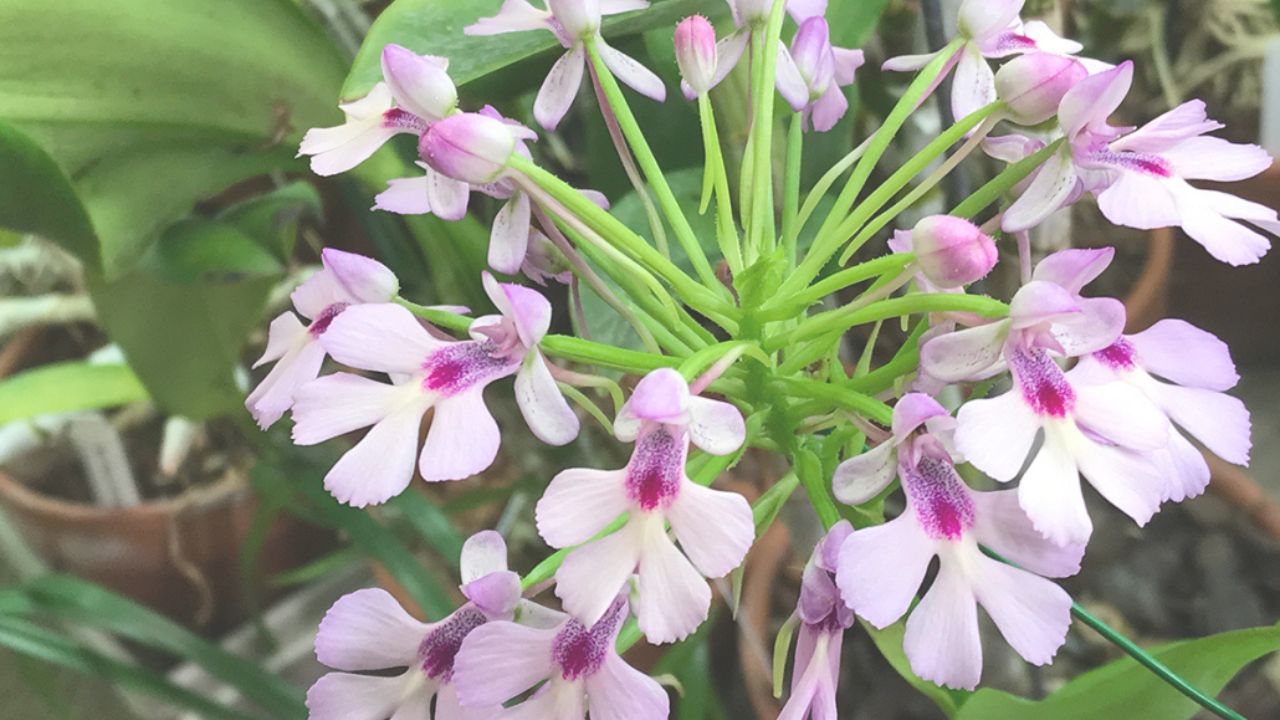
Cynorkis is a fascinating group of terrestrial orchids native mainly to Madagascar and nearby regions of the Indian Ocean. Unlike many popular tropical orchids that grow attached to trees, Cynorkis species generally develop from underground tubers or bulb-like structures and spend part of their life cycle beneath or close to the soil surface. Their unusual growth habit, attractive flowers, and seasonal dormancy make them particularly interesting for orchid enthusiasts.
Successful Cynorkis care begins with understanding its natural rhythm. Many species experience an active growing period followed by a resting period. During active growth, the plant needs suitable moisture, light, nutrients, and warmth. As the foliage naturally declines and the plant enters dormancy, watering should be reduced significantly. Respecting this seasonal cycle is one of the most important factors in keeping a Cynorkis healthy for many years.
Choosing the Right Growing Environment
Cynorkis orchids generally perform best in a warm, bright environment with good air circulation. They appreciate plenty of filtered light rather than intense, direct midday sunlight. A location near an east-facing window can provide gentle morning light, while stronger afternoon sunlight should be softened with a sheer curtain.
Temperature requirements can vary between species, but most cultivated Cynorkis appreciate moderate to warm conditions during active growth. Good ventilation is especially important because stagnant, humid air can encourage fungal and bacterial problems. Air movement does not mean placing the plant directly in front of a strong fan. Instead, aim for gentle circulation that allows moisture to evaporate gradually from the foliage and growing medium.
Humidity should be moderate rather than constantly wet. A humid environment can be beneficial during active growth, but excessive humidity combined with poor ventilation may cause problems. Keeping the plant in a balanced environment is more useful than trying to maintain extremely high humidity.
Selecting a Suitable Pot and Growing Medium
Because Cynorkis develops underground storage structures, the container and growing medium need to provide both moisture retention and excellent drainage. A pot with drainage holes is essential. Containers that hold standing water can quickly lead to root or tuber problems.
A loose orchid-style growing mixture can work well, particularly when it contains materials that maintain some moisture while allowing excess water to escape. A combination of fine bark, perlite, and another moisture-retentive but airy component can provide a useful balance. The exact mixture should be adjusted according to the species and the growing conditions.
Avoid heavy garden soil that becomes compacted after repeated watering. Dense soil restricts oxygen around the underground structures and may remain wet for too long. The goal is a medium that feels slightly moist during active growth without becoming saturated.
Planting Cynorkis Correctly
When planting Cynorkis, position the underground tuber carefully and avoid burying it excessively deep. The plant should have enough protection from drying while still being able to develop new growth naturally. Planting depth can vary according to the species, so when growing a particular Cynorkis, its individual requirements should be considered.
After planting, do not compensate for transplanting by keeping the medium constantly soaked. Allow the plant to establish gradually. Once active growth becomes visible, watering can be increased according to environmental conditions.
Repotting is best performed when the plant is naturally entering or leaving dormancy, depending on the species and its growth cycle. Handling the underground tubers gently is important because physical damage can create entry points for rot.
Watering During Active Growth
Water management is one of the most important aspects of Cynorkis orchid care. During the active growing season, the plant needs consistent moisture, but the growing medium should never remain waterlogged.
Water thoroughly when the upper portion of the medium begins to dry, allowing excess water to drain freely from the bottom of the container. The frequency will depend on temperature, humidity, pot size, and the type of growing medium. Plants grown in warm, dry conditions may need water more frequently than those kept in cooler or more humid environments.
It is better to monitor the plant and growing medium than to follow a rigid watering calendar. Yellowing leaves, soft underground structures, or an unpleasant smell from the medium can indicate excessive moisture. On the other hand, persistent wilting and extremely dry growing conditions may indicate that watering is insufficient.
Feeding for Strong Growth and Flowering
Cynorkis can benefit from regular feeding while actively growing. A balanced orchid fertilizer diluted according to its instructions is generally more appropriate than applying a strong concentration. Fertilizing lightly and consistently is usually safer than feeding heavily at irregular intervals.
Apply fertilizer to already moist growing media rather than heavily fertilizing a completely dry root system. During periods of vigorous leaf and root development, regular feeding can support healthy growth and eventual flowering.
As the plant approaches dormancy and its foliage naturally begins to decline, fertilizer should be reduced or stopped. Continuing heavy feeding while the plant is inactive wastes nutrients and can contribute to salt accumulation in the growing medium.
Managing Light for Healthy Leaves and Flowers
Light strongly influences the overall health and flowering performance of Cynorkis. Insufficient light may result in weak, elongated growth and poor flowering, while excessive direct sunlight can scorch delicate foliage.
Bright filtered light is generally a good starting point. Healthy leaves should have a natural, vigorous appearance rather than looking bleached or severely dark green. If the plant receives very strong sunlight through glass, use a curtain or move it slightly farther from the window.
For indoor cultivation, supplemental grow lights can be useful when natural light is inadequate. Keep artificial lighting at an appropriate distance and provide a consistent daily light period without exposing the plant to excessive heat.
Understanding Dormancy
Dormancy is a natural and essential part of the life cycle for many Cynorkis orchids. As the growing season ends, foliage may yellow and disappear. This does not necessarily mean that the plant is dying. The underground tuber can remain alive while the plant rests.
During dormancy, watering should generally be reduced substantially. The exact approach depends on the species and the storage conditions. Keeping the dormant tuber excessively wet is one of the easiest ways to encourage rot.
When new growth begins to emerge, gradually increase watering. Avoid suddenly saturating a completely dormant plant. A gradual transition allows the new growth to establish while reducing the risk of moisture-related problems.
Propagating Cynorkis Orchids
Propagation can be achieved through division of underground tubers in suitable species, although it requires patience and careful handling. Mature plants may produce additional tubers or growth structures that can eventually be separated when the plant is dormant or at an appropriate stage of its growth cycle.
Use clean tools when separating plant material to reduce the possibility of spreading disease. Each division should have a viable growing point or suitable underground structure. Plant the divisions in a fresh, well-draining medium and provide appropriate moisture as new growth develops.
Growing Cynorkis from seed is considerably more complicated because orchid seeds are extremely small and generally depend on specific fungal relationships for successful germination in nature. Commercial or specialist propagation techniques may therefore be necessary for reliable seed production and germination.
Preventing Common Problems
Cynorkis orchids are generally manageable when their natural growth cycle is respected, but several problems can occur. Root and tuber rot are usually associated with excessive moisture, poor drainage, or inadequate ventilation. The best prevention is a well-draining growing medium combined with careful watering.
Pests such as aphids, scale insects, mealybugs, and spider mites may occasionally appear, particularly on stressed indoor plants. Inspect leaves and new growth regularly. Early detection makes pest management much easier.
Leaf discoloration can have several causes, including inappropriate light, watering problems, nutrient imbalance, or natural seasonal aging. Before changing multiple aspects of care at once, observe the plant carefully and consider whether the change corresponds with its normal growth cycle.
Maintaining Cynorkis Throughout the Year
Long-term Cynorkis care is less about constant attention and more about adjusting care as the plant changes. During active growth, concentrate on light, moderate watering, feeding, airflow, and healthy root development. As the foliage begins to decline, gradually reduce watering and allow the plant to enter its natural resting phase.
Keep the dormant plant protected from excessive moisture and extreme temperature changes. When new growth appears, gradually return to the active-growth routine. This seasonal approach closely matches the plant’s natural behavior and can encourage stronger growth and flowering over time.
Encouraging Reliable Flowering
Good flowering generally results from healthy growth throughout the entire active season rather than from a single change immediately before blooming. Adequate light, appropriate nutrition, proper moisture, and a healthy underground storage structure all contribute to the plant’s ability to produce flowers.
Avoid overfertilizing in an attempt to force blooms. Excess nutrients can produce lush but weak growth and may damage roots. Instead, maintain consistent conditions and allow the plant to complete its natural growth and dormancy cycle.
With patience and careful observation, Cynorkis can become a rewarding addition to an orchid collection. Its seasonal behavior may require a slightly different approach from common epiphytic orchids, but once its rhythm is understood, growing and maintaining these unusual orchids becomes much easier.
