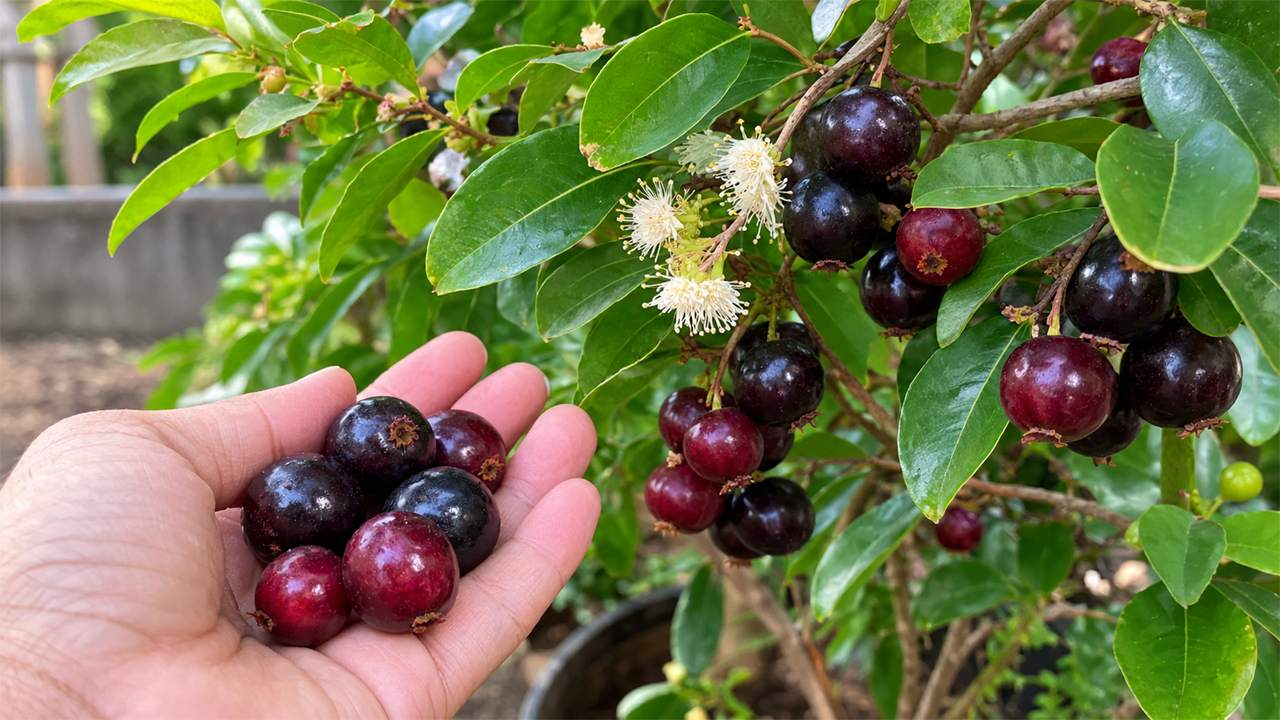
Grumichama (Eugenia brasiliensis), also known as Brazilian cherry, is an attractive tropical fruit tree valued for its glossy evergreen foliage, fragrant white flowers, and sweet, dark purple fruits. Native to Brazil, this member of the myrtle family is an excellent choice for home gardens, edible landscapes, and warm-climate orchards. Its compact growth habit and ornamental appearance make it suitable for growing as a specimen tree or in a spacious container.
Grumichama fruits resemble small cherries and typically have dark purple to nearly black skin when ripe, although some varieties produce yellow fruits. Their juicy flesh has a sweet, mildly acidic flavor that many gardeners enjoy eating fresh. With appropriate growing conditions and regular care, grumichama can become a productive and long-lived addition to a home garden.
Choosing the Right Climate and Growing Location
Grumichama grows best in warm, humid climates with mild winters. It thrives in tropical and subtropical regions and generally prefers temperatures between 65°F and 85°F (18°C to 29°C). Established trees may tolerate brief periods of cooler weather, but young plants are more sensitive to frost and should be protected from cold conditions.
Choose a location that receives full sun to partial shade. Six or more hours of sunlight daily generally encourages healthy growth, flowering, and fruit production. In particularly hot climates, some afternoon shade can help protect young trees from excessive heat and moisture loss.
A sheltered position is preferable because strong winds can damage young branches and dry out foliage. Ensure that the planting site has sufficient room for the tree to develop its canopy and root system. Grumichama can also be grown in a large container, making it an option for gardeners who need to move plants indoors or into a protected area during cold weather.
Selecting Seeds or Young Grumichama Plants
Grumichama can be propagated from seeds or by vegetative methods. Growing from seed is an accessible option for home gardeners, although seedlings may take several years to produce fruit and can differ from the parent tree in fruit quality and other characteristics.
Fresh seeds generally provide the best chance of successful germination. Remove seeds from fully ripe fruits, clean away the surrounding pulp, and plant them promptly because they may lose viability during prolonged storage. Sow each seed approximately half an inch deep in a container filled with a moist, well-draining propagation mix.
Keep the growing medium consistently moist but never waterlogged. Place the containers in a warm location with bright, indirect light. Germination time can vary depending on seed freshness, temperature, and growing conditions.
For more predictable fruit quality and potentially earlier production, purchase a healthy nursery-grown plant or a vegetatively propagated specimen from a reputable grower. Select plants with healthy green leaves, sturdy stems, and no visible signs of pests or disease.
Preparing the Soil for Planting
Grumichama prefers fertile, well-draining soil rich in organic matter. Slightly acidic soil is generally suitable, although established plants can tolerate a reasonable range of soil conditions when drainage and nutrition are adequate.
Before planting, loosen the soil across the intended planting area and incorporate mature compost if the soil lacks organic matter. Avoid adding excessive fertilizer or fresh manure directly into the planting hole, as concentrated nutrients can damage young roots.
Good drainage is particularly important. Constantly saturated soil can deprive roots of oxygen and encourage root rot. If your garden has heavy clay soil, consider improving the planting area’s drainage or growing the tree in a raised bed or large container with suitable potting mix.
When planting in a container, choose a pot with several drainage holes and enough space to accommodate root development. A container holding at least 15 to 25 gallons can provide a reasonable starting point for a young tree, although larger containers may be needed as it matures.
Planting Grumichama Trees Correctly
The beginning of the warm growing season is usually a suitable time to plant grumichama outdoors, provided there is no immediate risk of frost. In tropical climates, planting can be successful during a period when adequate moisture is available and extreme heat is less likely to stress the young tree.
Dig a hole approximately twice as wide as the root ball and no deeper than its height. Carefully remove the plant from its nursery container, keeping the roots as undisturbed as possible. Position the tree so that the top of the root ball remains level with the surrounding soil.
Backfill the hole with the original soil, gently firming it around the roots to eliminate large air pockets. Water thoroughly after planting to settle the soil and help the roots establish contact with their surroundings.
Apply a two- to three-inch layer of organic mulch around the base to conserve moisture and suppress weeds. Keep the mulch several inches away from the trunk to prevent excess moisture from accumulating against the bark. For multiple trees, allow enough spacing for mature canopies and airflow, adjusting the distance according to the expected size of the selected cultivar.
Watering and Maintaining Soil Moisture
Consistent watering is essential while a young grumichama tree establishes its root system. During the first growing season, water whenever the upper layer of soil begins to dry, adjusting the frequency according to rainfall, temperature, and soil drainage.
Rather than watering lightly every day, provide enough water to moisten the root zone thoroughly, then allow excess moisture to drain away. This encourages roots to grow deeper into the soil and reduces the risk of waterlogging.
Established trees are more tolerant of short dry periods, but prolonged drought can reduce flowering, fruit development, and overall plant health. Increase watering during hot weather and during the period when fruits are developing.
Container-grown trees usually dry out more quickly than trees planted in the ground. Check the soil regularly and make sure water can escape freely through the drainage holes. Yellowing leaves, persistently wet soil, or a sour smell from the root area may indicate excessive watering or poor drainage.
Fertilizing for Healthy Growth and Fruit Production
Grumichama benefits from balanced nutrition, particularly when grown in nutrient-poor soil or containers. Apply a balanced fertilizer suitable for fruit trees during the active growing season, following the product’s recommended application rate.
Young trees generally benefit from modest, appropriately spaced applications rather than one heavy dose. Excessive nitrogen can encourage leafy growth at the expense of flowering and fruit production. As the tree matures, adjust feeding according to its growth, soil fertility, and fruiting performance.
Compost or well-decomposed organic matter can help improve soil structure and provide a gradual supply of nutrients. Spread these materials around the root zone without piling them against the trunk.
If leaves develop persistent yellowing or growth becomes weak despite suitable watering, consider checking soil pH and nutrient availability before increasing fertilizer. Soil testing can help identify deficiencies and prevent unnecessary applications.
Pruning and General Tree Maintenance
Grumichama naturally develops an attractive canopy and usually requires only moderate pruning. Remove dead, damaged, diseased, or crossing branches to maintain healthy growth and improve airflow through the canopy.
Light pruning can help shape the tree, control its size, and make harvesting easier. Perform major structural pruning during a suitable period of active recovery, avoiding unnecessary removal of branches carrying flowers or developing fruit.
Use clean, sharp pruning tools to make neat cuts and reduce the risk of spreading disease. Avoid removing too much foliage at once, as excessive pruning can stress the tree and temporarily reduce fruit production.
Keep the surrounding area free of competing weeds, particularly while the tree is young. Maintain the mulch layer as needed and inspect the trunk and branches periodically for damage, unusual growth, or signs of insect activity.
Managing Common Pests and Diseases
Healthy grumichama trees are generally easier to maintain when they receive adequate sunlight, appropriate nutrition, and consistent moisture. Nevertheless, insects such as scale insects, aphids, and mealybugs may occasionally attack the foliage or tender shoots. Fruit flies and other fruit-feeding pests can also become a concern in some growing regions.
Inspect the undersides of leaves, young stems, and developing fruits regularly. Small infestations may be controlled by removing affected plant parts or washing pests away with water. If necessary, use a suitable treatment labeled for edible fruit trees and follow its instructions carefully, including any harvest waiting period.
Fungal problems are more likely when foliage remains wet for extended periods or soil drainage is poor. Provide adequate spacing, avoid excessive irrigation, and remove fallen or diseased plant material from around the tree.
If fruit becomes damaged or begins to rot, remove affected specimens promptly. Good garden hygiene, balanced fertilization, and careful watering can help reduce many common problems without relying on frequent chemical treatments.
Flowering, Pollination, and Fruit Development
Grumichama produces delicate white flowers that add ornamental value to the tree. Flowering and fruiting times vary according to climate, rainfall, tree maturity, and growing conditions. In suitable environments, mature trees may flower and produce fruit more than once during the year.
Bees and other insects can assist with pollination. Encourage beneficial pollinators by maintaining a diverse garden and avoiding unnecessary insecticide applications during flowering.
Seed-grown trees may take several years to bear fruit, while some vegetatively propagated plants can begin producing sooner. The exact time depends on the plant’s origin, maturity, and care.
Adequate sunlight, regular moisture, and balanced nutrition help support fruit development. Avoid sudden changes in watering, particularly when fruits are growing, because plant stress can affect fruit quality and yield.
Harvesting and Using Grumichama Fruits
Grumichama fruits are generally ready for harvesting when they develop their characteristic mature color and soften slightly. Depending on the variety, ripe fruits may be deep purple, nearly black, or yellow. Color alone is not always sufficient, so check for a pleasant aroma and gentle softness before picking.
Harvest fruits carefully by hand to avoid bruising their delicate skin. Ripe fruits may not remain in good condition for long, so collect them regularly during the fruiting season. Refrigerate freshly harvested fruit if it will not be eaten immediately, and wash it thoroughly before consumption.
Grumichama is delicious when eaten fresh, but the fruits can also be used in jams, jellies, sauces, desserts, and homemade fruit drinks. Their sweet-tart flavor makes them suitable for a variety of recipes.
For the best eating quality, harvest fruit when it is fully ripe but still firm enough to handle. Remove damaged or overripe fruits promptly to discourage pests and reduce waste.
Growing Grumichama Successfully in Containers
Container gardening allows people in cooler climates or homes with limited garden space to enjoy grumichama. Choose a sturdy pot with excellent drainage and use a high-quality growing medium that retains some moisture without becoming saturated.
Place the container where the plant receives several hours of sunlight daily. Rotate it occasionally if growth becomes uneven, and monitor soil moisture more frequently during hot weather.
As the tree grows, move it into a larger container when roots begin filling the existing pot or emerging from the drainage holes. Root pruning should be performed cautiously and only when necessary.
In regions where temperatures fall sharply during winter, move container-grown trees to a bright, sheltered location before cold conditions arrive. Reduce watering when growth slows, but do not allow the root ball to become completely dry for extended periods.
Conclusion
Growing grumichama is a rewarding way to add an unusual tropical fruit tree to a home garden. With warm temperatures, well-draining soil, suitable sunlight, consistent watering, and balanced nutrition, the tree can develop into an attractive evergreen plant that produces flavorful Brazilian cherries.
Choose fresh seeds or a healthy nursery plant, establish the tree carefully, and provide regular maintenance as it matures. Watch for pests, prune selectively, and harvest fruits when they reach their characteristic ripe color. With patience and appropriate care, grumichama can provide ornamental beauty and delicious homegrown fruit for many years.
