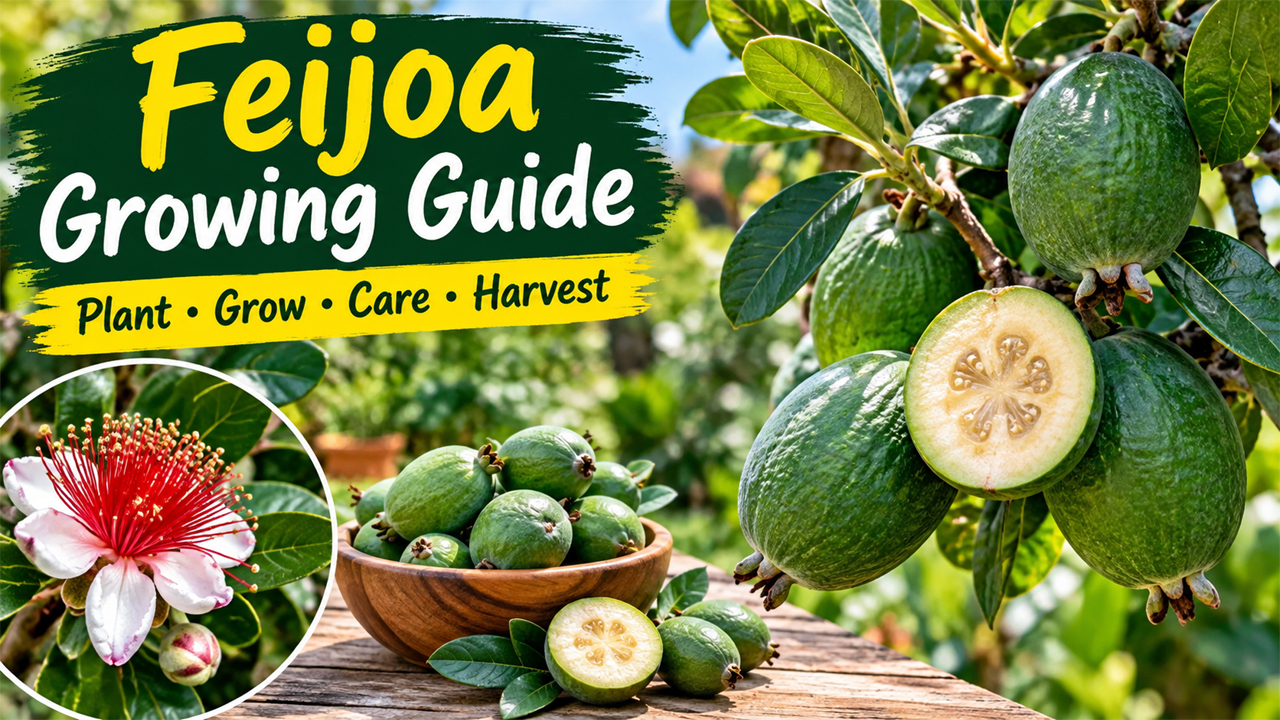
Feijoa Growing Guide: Feijoa, also known as pineapple guava, is an attractive evergreen fruit tree valued for its unusual flowers, aromatic foliage, and flavorful fruit. Its botanical name is Acca sellowiana, and it can be grown in home gardens, orchards, and large containers when the right conditions are provided. The tree is relatively low-maintenance once established, making it an appealing choice for gardeners who want both an ornamental plant and a productive fruit tree.
Feijoa produces attractive flowers followed by oval fruits with fragrant, juicy flesh. The fruit can be eaten fresh or used in desserts, drinks, preserves, and other recipes. Although the tree is adaptable, successful cultivation depends on choosing a suitable location, preparing well-drained soil, providing adequate water, and maintaining the plant with sensible pruning and feeding.
Choosing the Right Location
Selecting a suitable planting location is one of the most important steps when growing feijoa. The tree grows best in a sunny position where it can receive several hours of direct sunlight each day. Good exposure to sunlight encourages healthy foliage, flowering, and fruit development.
Feijoa can tolerate some wind and a range of conditions, but strong winds can damage branches and flowers, particularly on young trees. If possible, choose a sheltered location near a wall, fence, or other natural windbreak while still allowing sufficient sunlight and air circulation.
Consider the mature size of the tree before planting. Feijoa can develop into a substantial shrub or small tree, so provide enough space for its roots and branches to spread without interfering with buildings, paths, or other plants.
Preparing Soil for Feijoa
Feijoa is adaptable to different soil types but performs best in fertile, well-drained soil. Good drainage is particularly important because constantly waterlogged conditions can damage the roots and weaken the plant.
Before planting, loosen the soil deeply and remove weeds, large stones, and compacted material. Incorporating well-rotted compost or other organic matter can improve soil structure and provide a gradual supply of nutrients.
If the soil is heavy and drains poorly, improving drainage before planting is preferable to trying to correct the problem later. In areas with naturally poor soil, growing feijoa in a raised bed can also provide better control over the root environment.
Planting Feijoa Trees
Feijoa can be grown from seed, but seedlings may not produce fruit identical to the parent plant. For predictable fruit quality, grafted or named nursery trees are generally a better choice.
Plant during a period when the weather is mild and the tree has enough time to establish its roots before facing extreme heat or cold. Dig a hole that is wider than the root ball and deep enough to accommodate the roots without bending or crowding them.
Position the tree at approximately the same depth at which it was growing in its original container. Backfill with the prepared soil and gently firm it around the roots. Water thoroughly after planting to settle the soil and eliminate large air pockets.
Adding a layer of organic mulch around the root zone can help retain moisture and moderate soil temperatures. Keep mulch away from direct contact with the trunk.
Watering Feijoa Trees
Young feijoa trees need consistent moisture while their root systems become established. Water deeply whenever the upper soil begins to dry, adjusting the frequency according to rainfall, temperature, and soil conditions.
Established trees are more tolerant of short dry periods, but regular moisture is particularly valuable during flowering, fruit development, and periods of prolonged heat. Avoid watering on a fixed schedule without checking the soil because excessive moisture can be just as harmful as drought.
Deep watering encourages roots to explore the surrounding soil rather than remaining concentrated near the surface. A mulch layer can reduce evaporation and help maintain more stable moisture levels.
Feeding and Fertilizing Feijoa
Feijoa generally benefits from fertile soil and regular access to nutrients. A balanced fertilizer suitable for fruit trees can support healthy vegetative growth, flowering, and fruit production.
Feed according to the condition of the tree and the fertility of the soil. Excessive fertilizer, especially high-nitrogen products, can encourage vigorous leafy growth without necessarily improving fruit production.
Compost and other well-decomposed organic matter can be useful additions around established trees. Apply organic material around the root zone rather than directly against the trunk. Always follow the recommended application rates when using commercial fertilizers.
Pruning and Training Feijoa Trees
Feijoa naturally develops an attractive branching structure, but pruning can help control its size, improve airflow, and maintain a productive framework. Young trees can be trained to develop a strong central structure or several well-positioned main branches, depending on the desired shape.
Once established, remove dead, damaged, crossing, or weak branches. Dense areas of growth can also be thinned to allow more light and air to reach the interior of the canopy.
Avoid unnecessary heavy pruning because removing too much productive wood can reduce flowering and fruit production. Light, regular maintenance is usually easier and more beneficial than severe pruning performed infrequently.
Encouraging Flowering and Fruit Production
Feijoa produces attractive flowers that can contribute greatly to the ornamental value of the tree. Good sunlight, adequate nutrition, and appropriate watering all help support flowering and fruit development.
Some feijoa varieties are capable of producing fruit on their own, while others may benefit from cross-pollination with another compatible variety. Growing more than one suitable tree can improve pollination and potentially increase the size of the harvest.
Healthy pollinator activity can also be beneficial. Avoid unnecessary disruption of flowering trees and maintain a garden environment that supports natural pollinating insects.
Managing Common Feijoa Problems
Feijoa is generally considered a resilient plant, but it can still experience problems caused by pests, diseases, poor drainage, drought, or nutritional deficiencies. Regularly inspect the leaves, stems, flowers, and fruit for unusual discoloration, insect activity, or signs of damage.
Yellowing foliage can have several possible causes, including water stress, root problems, or nutrient deficiencies. Rather than immediately adding fertilizer, check the soil moisture, drainage, sunlight, and overall growing conditions.
Good garden hygiene also helps reduce problems. Remove fallen or damaged plant material when necessary, keep weeds under control, and avoid creating excessively damp conditions around the base of the tree.
Harvesting Ripe Feijoa Fruit
One of the most enjoyable parts of growing feijoa is harvesting the fragrant fruit. Depending on the variety and climate, fruit generally develops after flowering and gradually reaches maturity later in the growing season.
Ripe feijoas often have a pleasant fragrance and may detach from the tree naturally when mature. Many gardeners collect fruit that has fallen onto clean ground, while others gently test fruit on the tree and harvest it when it is ready.
Fruit should be handled carefully to prevent bruising. Fresh feijoas can be cut open and eaten with a spoon, while the fruit can also be used in smoothies, desserts, jams, sauces, and baked dishes.
Growing Feijoa in Containers
Feijoa can be grown in a large container, particularly when a naturally smaller variety is selected. Container cultivation is useful for patios, balconies, courtyards, and gardens where planting directly into the ground is not practical.
Choose a sturdy container with generous drainage holes and enough capacity for the tree’s developing root system. Use a high-quality, well-draining growing medium and avoid compacting it around the roots.
Container-grown feijoas require closer attention to watering because pots dry out faster than garden soil. They may also need periodic feeding as nutrients are gradually depleted from the growing medium. Pruning can help keep the plant at a manageable size.
Winter and Seasonal Care
Feijoa is adaptable and can tolerate cooler conditions once established, but young trees may need additional protection in areas that experience severe cold. Protect young plants from harsh weather and avoid exposing newly planted trees to unnecessary environmental stress.
Seasonal changes also affect watering and feeding requirements. During periods of active growth and fruit development, the tree may need more water and nutrients. During cooler or wetter periods, watering should be reduced when the soil remains naturally moist.
Monitoring the tree throughout the year is more effective than following a rigid care schedule because local climate and soil conditions can vary considerably.
Final Tips for Healthy Feijoa Trees
Growing feijoa successfully starts with choosing a sunny, well-drained location and planting a healthy tree. Provide consistent moisture during establishment, improve the soil with organic matter, and feed the plant appropriately as it develops.
Regular but moderate pruning keeps the canopy manageable and improves airflow, while good sunlight and suitable pollination conditions encourage better fruit production. Pay attention to changes in leaves, branches, flowers, and fruit so that growing problems can be addressed early.
With proper planting and consistent care, feijoa can become a long-lived and attractive addition to the garden. Its evergreen foliage, distinctive flowers, and fragrant fruit make it useful as both an ornamental tree and a productive home-grown fruit crop.
