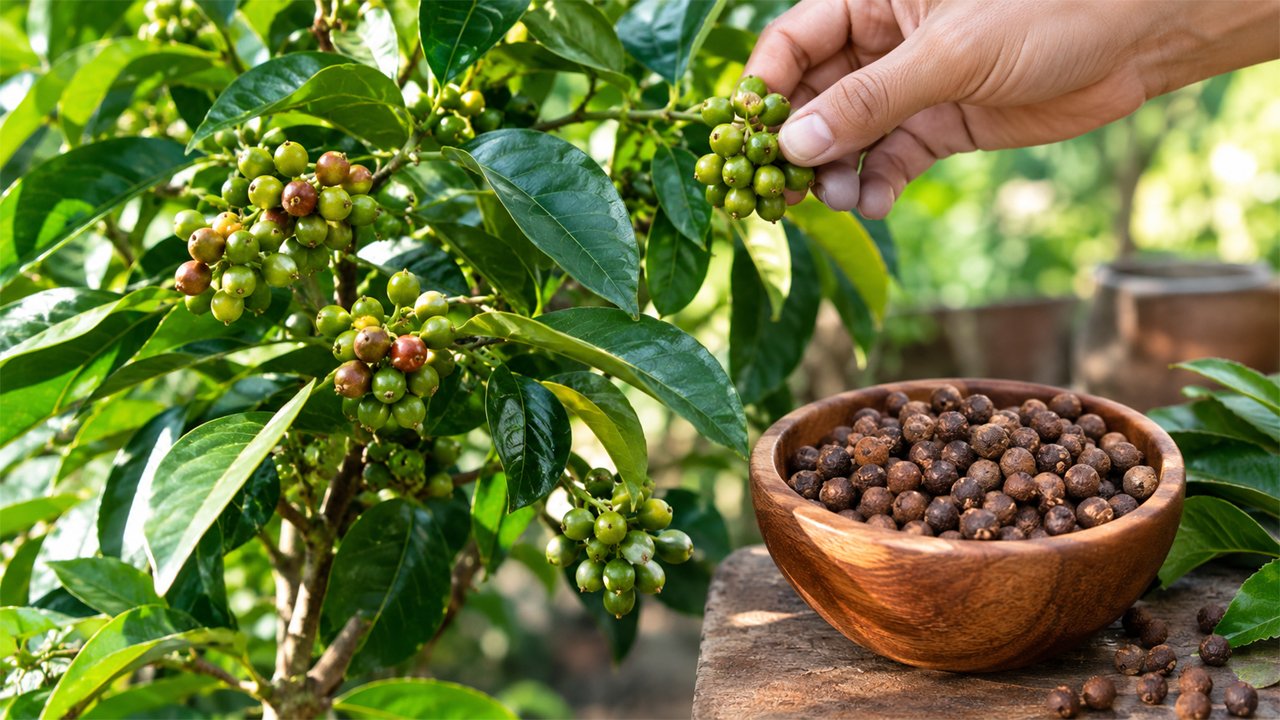
Allspice is a tropical evergreen tree best known for its aromatic berries, which have a flavor that combines hints of cinnamon, clove, nutmeg, and pepper. Native to the Caribbean and parts of Central America, the allspice tree can become an attractive addition to a warm home garden while also providing a useful harvest of fresh berries.
Growing allspice at home requires patience because the tree develops slowly compared with many common fruit and herb plants. With the right warmth, moisture, soil, sunlight, and regular care, however, it can eventually become a productive garden tree. Understanding its natural growing conditions is the first step toward raising a healthy allspice plant.
Choosing the Right Allspice Plant
Allspice is usually grown from seeds or young nursery plants. Starting with a healthy nursery plant is often easier for home gardeners because it eliminates some of the uncertainty associated with seed germination. Look for a plant with healthy green leaves, a strong central stem, and no obvious signs of pests, disease, or root damage.
If you prefer growing from seed, use fresh, mature allspice seeds because their ability to germinate can decline after storage. Seed-grown trees can take several years before reaching maturity, so they are best suited to gardeners who are comfortable waiting for a long-term harvest.
Allspice is a large tree when grown under favorable outdoor conditions, so consider its eventual size before planting. In a container, its growth can be restricted somewhat, although it will still require sufficient space for its roots and branches.
Selecting the Best Location
Warmth is one of the most important requirements for successful allspice cultivation. The tree naturally grows in tropical and subtropical environments, where temperatures remain relatively warm throughout much of the year. Choose a location that receives several hours of bright sunlight each day and is protected from strong, drying winds.
A position with morning or filtered afternoon sunlight can work particularly well in very hot climates. Young plants may benefit from protection against intense midday heat until they become established.
Because allspice does not tolerate prolonged frost well, gardeners in cooler regions should consider growing it in a large container that can be moved to a protected location when temperatures fall. Indoors, place the plant near a bright window where it receives plenty of natural light.
Preparing the Soil for Allspice
Allspice grows best in fertile, well-draining soil that holds enough moisture without becoming waterlogged. Heavy soil that remains saturated for long periods can deprive the roots of oxygen and increase the risk of root problems.
Before planting, improve poor garden soil with well-rotted organic matter or compost. This helps improve drainage, nutrient availability, and moisture retention. The soil should ideally be slightly acidic to neutral.
If you are growing allspice in a container, choose a pot with several drainage holes and use a high-quality, well-draining growing medium. Avoid placing the container directly in standing water, as consistently wet roots can weaken the plant.
How to Plant Allspice
Choose a planting site large enough to accommodate the developing root system. Dig a hole that is wider than the plant’s root ball but not unnecessarily deeper. Carefully remove the young plant from its container while avoiding excessive disturbance to the roots.
Place the plant so that the top of the root ball is level with, or slightly above, the surrounding soil. Fill the hole with the prepared soil and gently firm it around the roots. Water thoroughly after planting to settle the soil.
A layer of organic mulch around the base can help conserve moisture and regulate soil temperature. Keep mulch slightly away from the trunk to reduce the chance of excessive moisture around the stem.
Watering Allspice Plants
Allspice appreciates consistent moisture, particularly while young. Water deeply whenever the upper layer of soil begins to dry, allowing excess water to drain away naturally.
During hot or dry weather, newly planted trees may require more frequent watering. Mature trees generally become more resilient once their root systems are established, but they still benefit from adequate moisture during prolonged dry periods.
Avoid following a rigid watering schedule without checking the soil. Rainfall, temperature, container size, soil type, and sunlight all influence how quickly moisture disappears. The goal is to keep the root zone moderately moist rather than constantly saturated.
Providing Nutrients and Fertilizer
Healthy allspice growth depends on adequate nutrition. Young plants can benefit from a balanced fertilizer during active growth, while mature trees may require less frequent feeding if they are growing in naturally fertile soil.
Organic compost can also be applied around the root zone as part of regular garden maintenance. Apply fertilizer according to the product’s instructions and avoid excessive feeding, which can encourage weak vegetative growth or cause nutrient problems.
If leaves become unusually pale, growth slows, or the plant develops other signs of nutrient deficiency, examine the soil, watering routine, and overall growing conditions before simply increasing fertilizer.
Pruning and Maintaining the Tree
Allspice generally develops an attractive natural shape, so heavy pruning is rarely necessary. Light pruning can be used to remove dead, damaged, or diseased branches and to maintain a manageable structure.
Pruning can also improve air circulation through dense areas of the canopy. Use clean, sharp pruning tools and avoid removing large amounts of healthy growth at once.
Container-grown plants may require more regular shaping because their available space is limited. Pruning should be carried out carefully so the plant maintains enough healthy foliage for continued growth.
Protecting Allspice From Pests and Problems
A healthy allspice tree is generally easier to maintain than a stressed plant. Common garden pests may occasionally attack the leaves or young growth, particularly when plants are exposed to poor airflow, drought stress, or unsuitable conditions.
Regularly inspect the undersides of leaves, stems, and new shoots for insects or unusual damage. Remove heavily damaged foliage when appropriate and improve growing conditions to reduce stress.
Overwatering is another major concern. Yellowing leaves, weak growth, and persistently wet soil can indicate that the roots are receiving too much moisture. Good drainage and careful watering are essential for preventing many common problems.
Growing Allspice in Containers
Allspice can be grown in a container when outdoor soil conditions or climate are unsuitable. Choose a sturdy, large container with excellent drainage and gradually move the plant into larger pots as its root system develops.
Container-grown plants dry out more quickly than plants growing in the ground, so check the soil regularly. At the same time, avoid keeping the pot continuously wet.
Place the container in a warm, bright position and protect it from cold temperatures. Occasional root pruning or repotting may eventually be necessary when the plant becomes root-bound.
When and How to Harvest Allspice Berries
Patience is important because allspice trees can take several years to reach fruiting maturity. When the tree begins producing berries, they are normally harvested while they are still green and immature rather than after they have fully ripened.
The berries can be picked by hand when they have reached an appropriate size and development stage. Harvest carefully to avoid damaging young branches and developing flower or fruit clusters.
After harvesting, the berries are traditionally dried until they become dark brown and develop the familiar appearance and aroma associated with dried allspice. Proper drying helps concentrate their characteristic flavor and makes them suitable for longer storage.
Drying and Storing Fresh Allspice
Freshly harvested berries contain considerable moisture and should be dried thoroughly before long-term storage. Spread the berries in a clean, well-ventilated location where they can dry gradually. Avoid excessive humidity and make sure the berries are protected from contamination.
Once completely dry, store them in an airtight container away from direct sunlight, heat, and moisture. Whole dried berries generally retain their aroma and flavor better than ground allspice, so grinding them shortly before use can provide a fresher taste.
Common Mistakes to Avoid
One of the most common mistakes when growing allspice is planting it in a location that is too cold. Since the tree originates from warm tropical environments, prolonged exposure to cold can seriously affect growth.
Another mistake is keeping the soil constantly wet. Allspice needs moisture but also requires good drainage. Poor sunlight, excessive fertilizer, inadequate space, and neglecting young plants during dry weather can also slow development.
The best approach is to observe the plant regularly and adjust care according to its condition rather than following a fixed routine.
Final Tips for a Healthy Allspice Tree
Growing allspice at home is a long-term gardening project, but the reward is a beautiful evergreen tree and the opportunity to harvest your own aromatic berries. Start with a healthy plant, provide warmth and adequate sunlight, use fertile well-draining soil, and maintain consistent but controlled moisture.
Give the tree plenty of time to establish itself, especially if you are starting from seed. With proper care and suitable growing conditions, an allspice tree can become a productive and attractive part of a home garden for many years.
