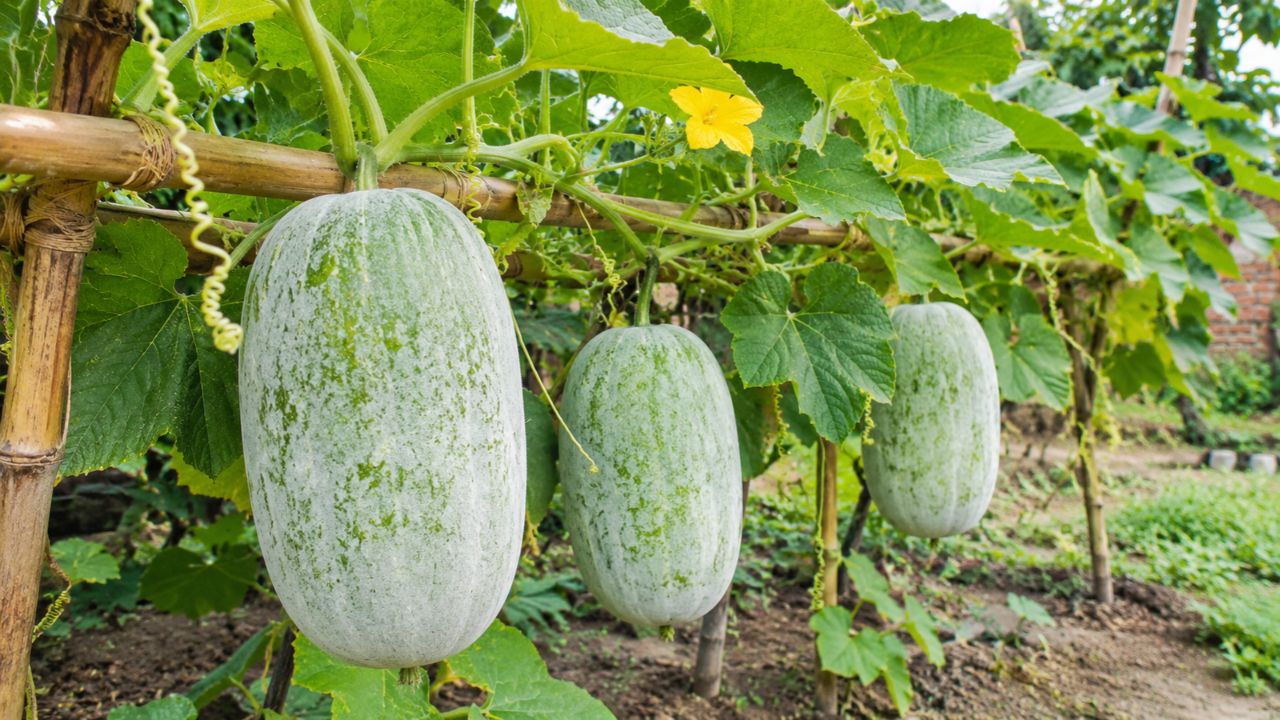
Wax gourd (Benincasa hispida), commonly known as ash gourd, winter melon or white pumpkin, is a fast-growing vegetable belonging to the Cucurbitaceae family. It is widely cultivated throughout India and other Asian countries for its nutritious fruits and culinary uses.
Wax gourd is a productive climbing or trailing plant that grows well in warm climates. Its large green leaves, yellow flowers and attractive fruits make it an excellent addition to home gardens. With suitable soil, adequate sunlight, regular watering and proper maintenance, gardeners can enjoy a rewarding harvest.
Understanding the Growth Characteristics of Wax Gourd
Wax gourd is an annual vegetable vine that develops long, vigorous stems with broad leaves and climbing tendrils. The plant produces separate male and female flowers, while pollination is primarily carried out by bees and other insects.
Young fruits generally have green skin covered with fine hairs. As they mature, many varieties develop a distinctive white waxy coating that protects the fruit and improves its storage life.
The plant requires sufficient growing space because its vines can spread several metres when provided with favourable conditions.
Best Climate and Temperature for Growing Wax Gourd
Wax gourd thrives in warm tropical and subtropical climates. Temperatures between 24°C and 30°C generally provide favourable conditions for healthy development, flowering and fruit production.
Select a location that receives at least six to eight hours of direct sunlight daily. Adequate sunlight encourages vigorous growth and supports fruit development.
In India, wax gourd can be planted during spring or the monsoon season, depending on regional weather conditions and drainage. Avoid planting during extremely cold weather because low temperatures can delay germination and damage tender seedlings.
Choosing the Best Soil for Wax Gourd
Fertile, well-drained sandy loam or loamy soil provides an excellent growing medium for wax gourd. A soil pH of approximately 6.0 to 7.0 is suitable for most varieties.
Prepare the planting area by loosening compacted soil and incorporating well-decomposed compost or aged farmyard manure. Organic matter improves moisture retention, soil structure and nutrient availability.
Avoid areas where water remains standing after rainfall. Excessive moisture around the roots increases the risk of fungal infections and poor plant development. Raised garden beds are particularly useful in locations with heavy rainfall.
How to Grow Wax Gourd from Seeds
Choose healthy seeds from a reliable source and prepare the planting area before sowing. Wax gourd can be grown directly from seeds without requiring complicated propagation techniques.
Sow two or three seeds approximately two to three centimetres deep in each prepared planting location. Cover them gently with loose soil and water carefully.
Under favourable conditions, germination generally occurs within seven to fourteen days. Once the seedlings develop healthy leaves, retain the strongest plant.
Provide adequate spacing according to the variety and growing method. Ground-grown vines generally require more space than plants trained vertically on strong supports.
Watering Requirements for Healthy Wax Gourd Plants
Regular watering is important during germination, active vine development, flowering and fruit formation. Although established wax gourd plants tolerate short dry periods, prolonged moisture shortages can reduce productivity.
Water deeply whenever the upper layer of soil begins to dry. Early morning watering allows moisture to reach the roots before daytime temperatures increase.
Avoid frequent shallow watering and excessive irrigation. Applying organic mulch around the plant helps conserve moisture, maintain stable soil temperatures and suppress unwanted weeds.
Adjust watering frequency according to rainfall, temperature and soil conditions rather than following a fixed daily schedule.
Fertilising Wax Gourd for Better Growth
Wax gourd benefits from nutrient-rich soil throughout its growing season. Incorporating mature compost before planting provides a useful foundation for early development.
During active growth, apply a suitable balanced vegetable fertiliser according to its recommended application instructions. Additional nutrients may be required when plants begin flowering and developing fruits.
Avoid excessive nitrogen fertilisation because it can encourage abundant foliage without supporting satisfactory fruit production.
Regular additions of mature compost or vermicompost can help maintain soil fertility and support healthy root activity. Keep concentrated fertilisers away from direct contact with stems and roots.
Providing Support for Climbing Wax Gourd Vines
Wax gourd vines can spread across the ground or grow vertically using suitable structures. Bamboo frameworks, strong metal trellises and sturdy garden supports help organise vigorous growth.
Vertical cultivation improves air circulation, sunlight exposure and accessibility during routine maintenance. However, mature wax gourds can become extremely heavy, so the supporting structure must be sufficiently strong.
Fruit slings may provide additional support for smaller varieties grown vertically. Large-fruited varieties are often better suited to ground cultivation.
Place dry straw beneath developing ground-grown fruits to minimise direct contact with damp soil.
Flowering and Pollination in Wax Gourd
Wax gourd produces attractive yellow flowers that play an essential role in fruit formation. Male flowers generally appear before female flowers during the early flowering period.
Female flowers can be identified by the small, immature fruit located behind their petals. Successful pollination allows these young fruits to continue developing.
Encourage natural pollination by growing flowering plants nearby and avoiding unnecessary insecticide applications during blooming.
If pollinator activity is limited, hand pollination can be performed by gently transferring pollen from a freshly opened male flower to the centre of a female flower.
Managing Common Pests and Diseases
Wax gourd plants may encounter aphids, fruit flies, red pumpkin beetles and other garden pests. Regular inspection helps identify problems before they become severe.
Fungal diseases such as powdery mildew, anthracnose and downy mildew may develop under unfavourable growing conditions.
Maintain adequate spacing, remove badly affected foliage and avoid unnecessary overhead watering. Keeping the garden free from infected plant debris also reduces potential disease pressure.
Protect developing fruits from fruit flies using suitable breathable fruit covers after pollination. Crop rotation and good garden hygiene contribute to healthier plants over successive growing seasons.
Growing Wax Gourd in Containers
Gardeners with limited outdoor space can grow compact wax gourd varieties in large containers. Choose a container with generous root space and several drainage holes.
Use a fertile potting mixture containing garden soil, mature compost and suitable drainage-improving materials. Position the container in a sunny location and install a sturdy climbing structure.
Container-grown plants usually require more frequent watering than those grown directly in garden soil. Monitor moisture regularly, particularly during hot weather.
Choose smaller-fruited varieties for balcony or terrace gardens to make plant management easier.
Harvesting and Storing Wax Gourd
Wax gourd can be harvested at immature or mature stages, depending on its intended culinary use. Tender young fruits are suitable for everyday vegetable preparations, while mature fruits are preferred for extended storage.
Many varieties reach full maturity approximately 100 to 160 days after sowing. Mature fruits commonly develop a firm outer skin and a noticeable white waxy coating.
Use clean garden shears to harvest the fruit without damaging the vine. Leave a short portion of the stalk attached and handle the fruit carefully.
Store mature, undamaged gourds in a cool, dry and well-ventilated location.
Conclusion
Growing wax gourd at home is a rewarding experience that requires warm weather, fertile soil, sufficient sunlight and consistent maintenance. Proper watering, balanced nutrition, effective pollination and timely pest management encourage healthy vines and productive harvests.
Whether cultivated in a spacious backyard or a well-managed terrace garden, wax gourd can become a valuable addition to your home vegetable collection.
