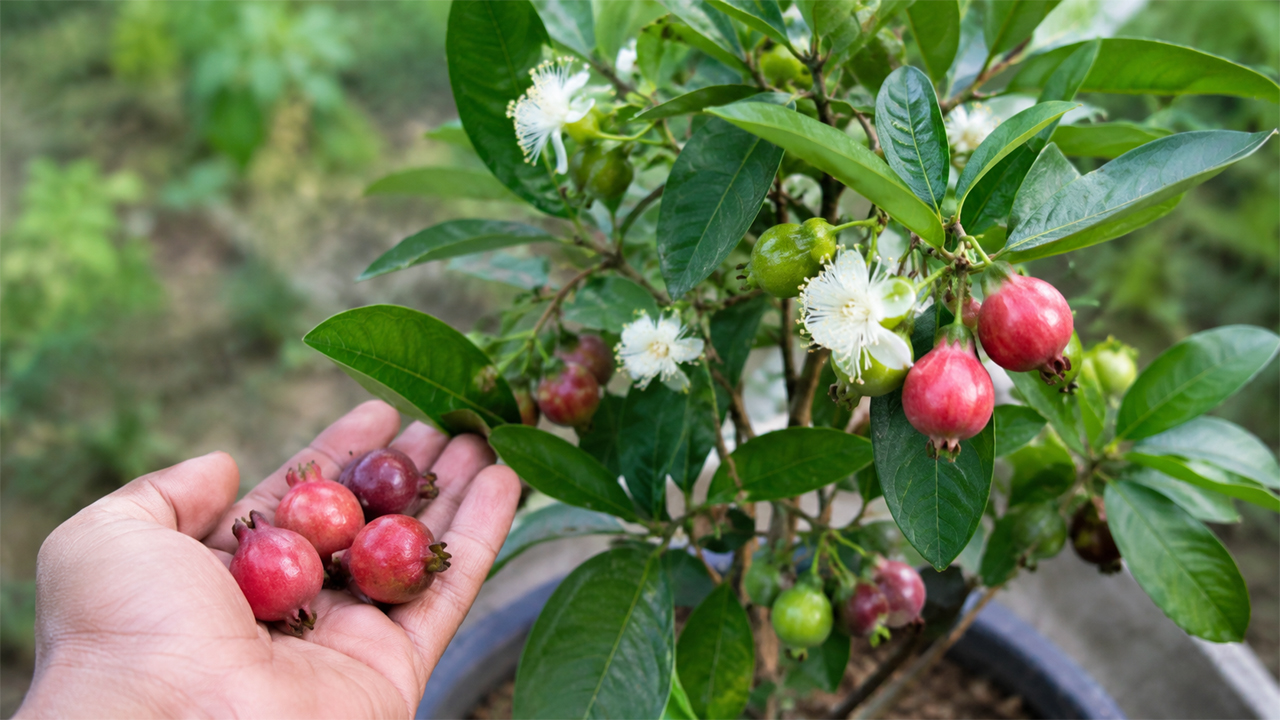
Strawberry guava (Psidium cattleianum) is a beautiful evergreen fruit tree that can be grown in home gardens, large containers, and warm climates. It is valued for its attractive foliage, fragrant white flowers, and small, sweet fruits that often develop a reddish-purple or strawberry-like color when ripe. Once established, the plant is relatively easy to maintain and can provide fresh fruit for years with the right care.
Growing strawberry guava successfully starts with choosing a healthy plant, providing suitable soil and sunlight, and maintaining consistent moisture during establishment. Although the plant is adaptable, giving it favorable growing conditions will encourage stronger growth, better flowering, and a more reliable harvest.
Choosing the Right Strawberry Guava Plant
Before planting, choose a healthy strawberry guava plant from a reliable nursery or garden center. A young plant with a strong central stem, healthy green leaves, and no obvious signs of pests or disease is usually the best choice. Avoid plants with damaged roots, yellowing leaves, severe leaf spotting, or weak, broken stems.
Strawberry guava can be grown from seed, but seed-grown plants may take longer to produce fruit and may not always reproduce the exact characteristics of the parent plant. Nursery-grown plants or healthy propagated plants are generally a better option if your main goal is to harvest fruit sooner.
Selecting the Best Location
Strawberry guava grows best in a warm location with plenty of sunlight. Choose a spot that receives at least six hours of direct sunlight each day. More sunlight generally encourages compact growth, flowering, and fruit production.
The planting area should also have good air circulation. Avoid placing the plant in a constantly wet or poorly ventilated corner of the garden. If you are growing it near a house, wall, or other large plant, leave enough space for the tree to develop without becoming crowded.
Strawberry guava can tolerate some partial shade, particularly in very hot climates, but plants grown in insufficient light may become leggy and produce fewer flowers and fruits.
Preparing the Soil
Good drainage is one of the most important requirements for strawberry guava. The plant can tolerate different soil types, but it performs best in fertile, well-draining soil that retains some moisture without becoming waterlogged.
Before planting, loosen the soil to a depth of around 30 to 45 centimeters. Remove large stones, weeds, and compacted roots. Incorporating mature compost or well-rotted organic matter can improve soil structure and provide nutrients for young plants.
If the soil is heavy clay, improving drainage is particularly important. Raised planting areas or large containers with drainage holes can help prevent excess water from accumulating around the roots.
How to Plant Strawberry Guava
Dig a planting hole that is wider than the plant’s root ball and approximately the same depth as the container in which it was growing. Carefully remove the plant without damaging the roots.
Place it in the hole so that the top of the root ball sits level with or slightly above the surrounding soil. Avoid planting too deeply because buried stems can develop problems when constantly exposed to moisture.
Fill the hole with the prepared soil and gently firm it around the roots. Water thoroughly after planting to settle the soil and remove large air pockets.
Adding a layer of organic mulch around the plant can help conserve moisture and reduce weed growth. Keep the mulch a few centimeters away from the main stem to prevent excessive moisture from remaining against the trunk.
Watering Strawberry Guava
Young strawberry guava plants need regular watering while their root systems become established. Water deeply whenever the upper layer of soil begins to dry rather than giving the plant frequent, shallow amounts of water.
During hot or dry weather, newly planted trees may require more frequent watering. Once established, strawberry guava is considerably more tolerant of short dry periods, but consistent moisture is still beneficial during flowering and fruit development.
Avoid keeping the soil constantly saturated. Poor drainage and excessive watering can reduce root health and encourage fungal problems. Before watering, check the soil with your finger and water when the surface has begun to dry.
Feeding and Fertilizing
Strawberry guava benefits from regular nutrition, particularly when it is young and actively growing. A balanced fruit-tree fertilizer or a suitable organic fertilizer can be applied according to the product’s instructions.
Compost and other well-decomposed organic materials can also be used to maintain soil fertility. Fertilization is generally most useful during active growth, while excessive feeding should be avoided.
Too much nitrogen can encourage vigorous leafy growth without producing as many flowers and fruits. A balanced feeding routine is therefore preferable to applying large quantities of fertilizer at once.
Pruning and Training the Plant
Pruning helps maintain a manageable shape and encourages healthy growth. Young strawberry guava plants can be trained to develop a strong structure by removing weak, crossing, or damaged branches.
Once the plant becomes established, prune lightly after fruiting or during an appropriate period of active growth. Remove dead and diseased branches first, followed by branches that grow inward or create excessive crowding.
If you are growing strawberry guava in a container or a small garden, regular light pruning can keep the plant compact. Avoid removing too much healthy growth at one time because heavy pruning can temporarily reduce flowering and fruit production.
Growing Strawberry Guava in Containers
Strawberry guava can also be grown successfully in a large container, making it a practical choice for patios, balconies, and smaller gardens. Select a container with several drainage holes and enough room for the roots to develop.
Use a high-quality, well-draining potting mix rather than heavy garden soil. Place the container in a sunny location and monitor moisture more frequently than you would with a plant growing in the ground because containers dry out faster.
As the plant grows, it may eventually need to be moved into a larger container. Repotting should be done carefully to minimize root disturbance. Container-grown plants may also require more regular feeding because nutrients are gradually washed out through watering.
Protecting Strawberry Guava From Pests and Diseases
Healthy strawberry guava plants are generally resilient, but they can still experience pest and disease problems. Common issues may include aphids, scale insects, fruit flies, and other insects that feed on leaves or developing fruit.
Inspect the leaves and young stems regularly. Early detection makes pest management much easier. Remove heavily damaged leaves when appropriate and maintain good air circulation around the plant.
Fungal problems are more likely when foliage remains wet for long periods or when plants are overcrowded. Watering near the soil instead of repeatedly wetting the leaves can help reduce unnecessary moisture on the foliage.
Encouraging Flowers and Fruit
Adequate sunlight, appropriate watering, and balanced nutrition are the foundation of good fruit production. A healthy strawberry guava usually flowers when it has reached sufficient maturity and is growing under favorable conditions.
Be patient with young plants, especially those grown from seed. Fruiting time can vary considerably depending on the plant’s age, growing conditions, and propagation method.
When flowers appear, avoid excessive pruning or major changes in watering. Consistent care allows the plant to put more energy into developing fruit. If your plant produces fruit, protecting the developing crop from birds and insects may also become necessary.
When and How to Harvest Strawberry Guava
Strawberry guava fruits should generally be allowed to mature on the plant before harvesting. Depending on the variety, ripe fruit can develop shades ranging from pink and red to deep reddish-purple.
A ripe fruit should have developed its characteristic color and should feel slightly soft when gently touched. Fruits that are still very firm may need additional time to mature.
Pick ripe fruits carefully by hand to avoid damaging the branches. Harvesting regularly can encourage continued production and prevents overripe fruit from remaining on the plant.
Fresh strawberry guava can be eaten directly after washing. Its sweet, aromatic flavor also makes it suitable for juices, jams, jellies, desserts, and other homemade preparations.
Common Problems When Growing Strawberry Guava
One of the most common mistakes is overwatering. Although young plants need consistent moisture, permanently wet soil can damage the roots. Another common problem is insufficient sunlight, which can lead to weak, stretched growth and reduced fruiting.
Poor nutrition may result in slow growth, while excessive fertilizer can encourage leaves at the expense of flowers and fruit. Incorrect pruning can also reduce production if too many productive branches are removed.
Regular observation is the simplest way to prevent many problems. Check the soil, leaves, branches, and developing fruit regularly so that changes can be addressed before they become serious.
How to Maintain a Healthy Strawberry Guava Plant
Long-term care is relatively straightforward once the plant is established. Provide plenty of sunlight, water when necessary, maintain well-drained soil, and feed the plant moderately during active growth.
Keep weeds and competing plants away from the base, refresh organic mulch periodically, and prune damaged or overcrowded branches when necessary. Container-grown plants need additional attention because their roots have limited space and their soil can dry out more quickly.
With consistent care, a strawberry guava can become an attractive and productive feature of a home garden. Its evergreen foliage provides year-round interest while its colorful fruit adds an additional benefit.
Final Thoughts on Growing Strawberry Guava at Home
Growing strawberry guava at home is a rewarding project for gardeners who want an attractive fruiting plant that does not require complicated maintenance. The most important factors are sunlight, well-drained fertile soil, appropriate watering, and patience while the plant becomes established.
Whether planted directly in the garden or grown in a large container, strawberry guava can thrive when its basic needs are met. With regular observation, light pruning, balanced feeding, and careful watering, you can encourage healthy growth and eventually enjoy sweet, aromatic fruits harvested straight from your own plant.
