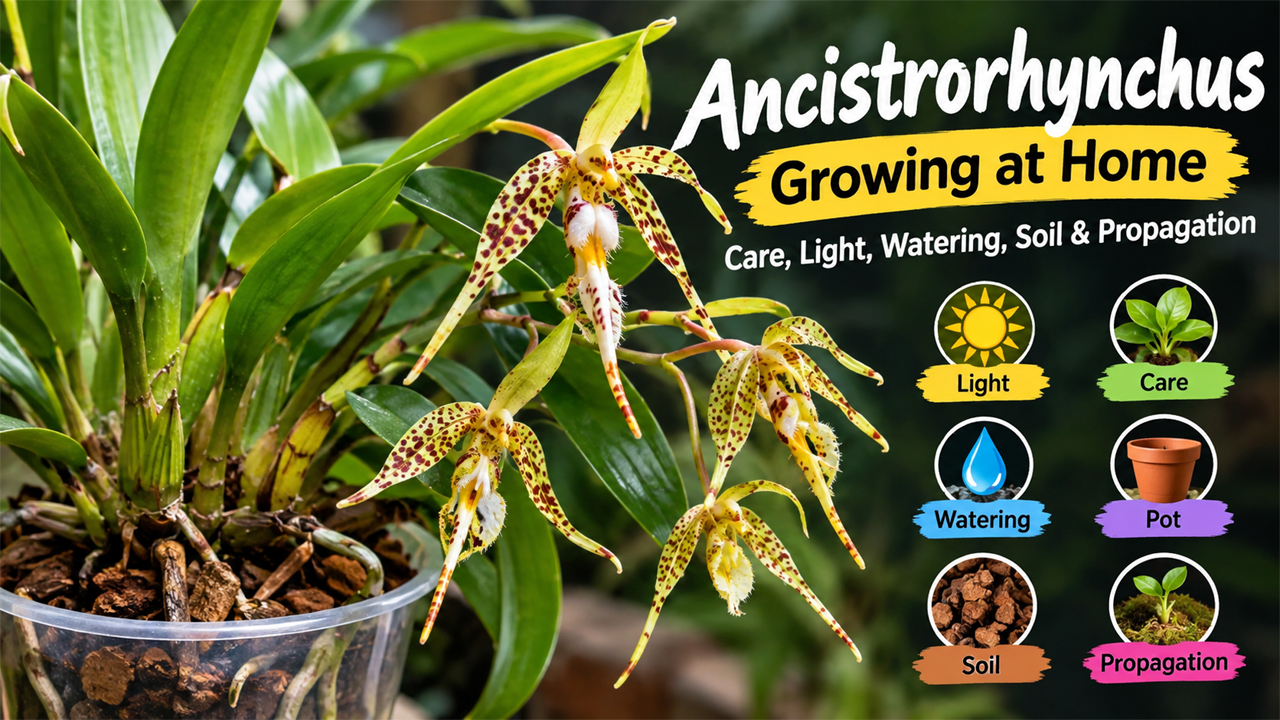
Growing Ancistrorhynchus at Home: Ancistrorhynchus is a fascinating orchid genus appreciated by collectors for its unusual flowers, compact growth, and distinctive botanical character. Although it is not as commonly grown as popular orchids such as Phalaenopsis or Dendrobium, Ancistrorhynchus can become a rewarding addition to a specialized orchid collection when its growing conditions are understood.
Growing this orchid successfully is less about complicated techniques and more about creating an environment that resembles its natural habitat. Good airflow, suitable moisture, filtered light, an airy growing medium, and consistent temperatures are especially important. With the right routine, even growers who are new to unusual orchid genera can learn how to keep Ancistrorhynchus healthy and encourage steady growth.
Understanding Ancistrorhynchus Before Growing It
Ancistrorhynchus belongs to the orchid family and includes species adapted to warm, humid environments. Many orchids in this group are epiphytic or adapted to growing with excellent drainage around their roots. This means they generally do not appreciate heavy garden soil that stays wet for long periods.
The roots need access to both moisture and air. If the growing medium remains saturated, the roots can become weak and eventually rot. On the other hand, allowing the plant to become completely dry for extended periods can cause stress, especially during active growth.
Before purchasing or propagating an Ancistrorhynchus, it is useful to identify the particular species because growing preferences can vary. However, the basic principles of orchid cultivation remain valuable: provide bright filtered light, good humidity, regular but controlled watering, and excellent drainage.
Choosing the Right Location
The location you choose can make a major difference in the health of Ancistrorhynchus. A bright indoor area near a window can work well, provided the plant is protected from intense direct afternoon sunlight.
An east-facing window is often a practical choice because it provides gentle morning light. A bright north-facing location may also work depending on the climate and window exposure. In areas with strong sunlight, placing the orchid slightly away from the window or using a sheer curtain can prevent leaf scorching.
Outdoor cultivation is possible in suitable warm climates, but the plant should be protected from harsh midday sunlight, heavy rain, and strong winds. A shaded balcony, greenhouse, orchid house, or covered patio can provide better control over its environment.
Providing the Right Light
Light is essential for healthy Ancistrorhynchus growth, but excessive direct sunlight can damage its leaves. The ideal approach is usually bright, diffused or filtered light.
Healthy leaves should generally appear green and firm. Very dark green foliage can sometimes indicate insufficient light, while yellowing, bleached patches, or brown areas may indicate excessive exposure.
Rather than suddenly moving the plant into strong sunlight, increase its light gradually. Orchids can become stressed when their lighting conditions change too quickly. If natural light is insufficient, artificial grow lights can be used to provide additional illumination.
Keeping the plant in suitable light also supports flowering. A plant receiving adequate light is more likely to produce strong new growth and develop the energy required for blooming.
Selecting Soil and Growing Medium
Ancistrorhynchus should not normally be planted in ordinary garden soil. Dense soil can restrict air around the roots and hold excessive moisture, increasing the risk of root problems.
A loose orchid mix is much more appropriate. Materials such as fine to medium orchid bark, sphagnum moss, perlite, charcoal, or other well-draining components can be combined according to the plant’s needs and local humidity.
The goal is not simply to make the mix drain quickly. It should also retain enough moisture to prevent the roots from becoming excessively dry between waterings while maintaining good air circulation.
Older growing media should eventually be replaced because bark and other organic materials gradually break down. Once the medium becomes compacted, drainage and airflow can decline significantly.
Choosing the Right Pot
A pot with excellent drainage is essential. Containers with several drainage holes allow excess water to escape quickly and help prevent stagnant moisture around the roots.
Transparent orchid pots can be particularly useful because they allow growers to observe root condition and moisture levels. However, a suitable opaque orchid pot can also work perfectly well when watering is managed carefully.
Avoid choosing a very large container simply because you expect the plant to grow. Excess space can cause the growing medium to remain wet for too long. A pot that comfortably accommodates the root system while allowing some room for future growth is generally a better choice.
Watering Ancistrorhynchus Correctly
Watering is one of the most important parts of Ancistrorhynchus care. The plant needs moisture, but its roots also require oxygen. Watering too frequently can therefore be just as harmful as allowing the plant to become excessively dry.
Check the growing medium before watering. If it is still noticeably wet, wait until it has dried to an appropriate level. When watering is needed, thoroughly moisten the medium and allow excess water to drain away completely.
Morning watering is often convenient because leaves and surrounding surfaces have more time to dry during the day. Avoid allowing water to remain trapped in the center of the plant for prolonged periods.
The watering schedule should change with the season. Warm, actively growing plants may require more frequent watering, while cooler or darker conditions can slow evaporation and reduce the plant’s water requirements.
Maintaining Humidity and Airflow
Ancistrorhynchus generally benefits from a humid growing environment, particularly when temperatures are warm. However, high humidity without sufficient airflow can create problems.
Good ventilation helps moisture evaporate from leaves and prevents the growing area from becoming stagnant. A gentle fan can be useful when growing orchids indoors or inside a greenhouse.
Humidity can be increased with a humidifier or by grouping plants together, but the growing medium should still be allowed to drain properly. The objective is to create humid air rather than permanently wet roots.
In dry indoor environments, monitoring the plant regularly is more useful than following a fixed humidity routine. Signs such as shriveled leaves or roots can indicate that the plant is struggling with insufficient moisture.
Temperature Requirements
Warm and stable conditions are generally suitable for Ancistrorhynchus. Avoid placing the plant near cold drafts, heating vents, air conditioners, or locations where temperatures change dramatically.
During particularly hot weather, increased airflow and slightly greater attention to watering may be necessary. At the same time, excessive heat combined with stagnant air can place considerable stress on the plant.
Maintaining a relatively stable environment is often more beneficial than trying to achieve a perfect temperature every hour of the day.
Feeding and Fertilizing
Ancistrorhynchus can benefit from regular but moderate feeding during active growth. A balanced orchid fertilizer diluted according to its label instructions can be applied periodically.
It is generally better to provide a weaker fertilizer solution consistently than to use a highly concentrated solution that could damage the roots. Fertilizing should be reduced when the plant is not actively growing.
Occasionally flushing the growing medium thoroughly with clean water can help remove accumulated fertilizer salts. This is particularly useful when the plant is grown in a container where minerals can build up over time.
Repotting Ancistrorhynchus
Repotting should be done when the growing medium has deteriorated, the container has become unsuitable, or the roots have outgrown the available space. It is usually best to avoid unnecessary disturbance.
When repotting, gently remove the old medium and inspect the roots. Healthy roots should generally be firm rather than soft and collapsing. Damaged or rotten sections can be removed with a clean, sterilized cutting tool.
Place the plant into fresh, airy orchid medium without burying it too deeply. After repotting, provide suitable humidity and gentle conditions while the plant adjusts.
Propagating Ancistrorhynchus
Propagation of Ancistrorhynchus is not usually as simple as propagating common houseplants. Orchid propagation from seed requires specialized conditions because orchid seeds are extremely small and generally depend on suitable fungal or laboratory-assisted conditions for successful development.
For growers working with mature plants, vegetative propagation may sometimes be possible depending on the species and its growth habit. Any division should only be attempted when the plant is large and healthy enough to tolerate the process.
Because orchid propagation can be slow, patience is essential. Newly propagated plants need stable moisture, humidity, airflow, and appropriate light rather than aggressive feeding or frequent disturbance.
Common Problems When Growing Ancistrorhynchus
Root rot is one of the most common concerns when orchids are kept excessively wet. Soft roots, unpleasant smells, declining leaves, and poor growth can indicate problems with the root system.
Leaf scorching usually results from excessive direct sunlight, while weak or unusually dark foliage may indicate insufficient light. Persistent moisture combined with poor airflow can also encourage fungal or bacterial problems.
Pests such as scale insects, mealybugs, aphids, and mites may occasionally affect orchids. Inspect leaves, stems, and growing areas regularly so problems can be addressed early.
The best approach is prevention. Clean growing conditions, good airflow, appropriate watering, and regular observation can reduce many common problems.
Creating a Simple Care Routine
A consistent routine makes Ancistrorhynchus much easier to manage. Check the plant every few days rather than watering automatically according to a calendar. Examine the growing medium, roots, leaves, and overall growth.
Provide bright filtered light, maintain suitable humidity, and make sure air can circulate around the plant. Water thoroughly when the plant needs it and allow excess water to drain completely.
During active growth, provide diluted fertilizer periodically and monitor whether the potting medium is breaking down. Remove damaged plant material when necessary and repot when the existing medium no longer provides good drainage.
Final Thoughts on Growing Ancistrorhynchus
Growing Ancistrorhynchus at home can be a satisfying experience for orchid enthusiasts who enjoy unusual and less commonly cultivated plants. Its care does not depend on complicated equipment as much as it depends on understanding the relationship between moisture, airflow, light, temperature, and roots.
The most important principles are simple: use a loose and well-draining orchid medium, provide bright filtered light, water carefully, maintain humidity without sacrificing airflow, and avoid unnecessary disturbance. With patience and consistent observation, Ancistrorhynchus can establish itself as a healthy and distinctive part of an orchid collection.
