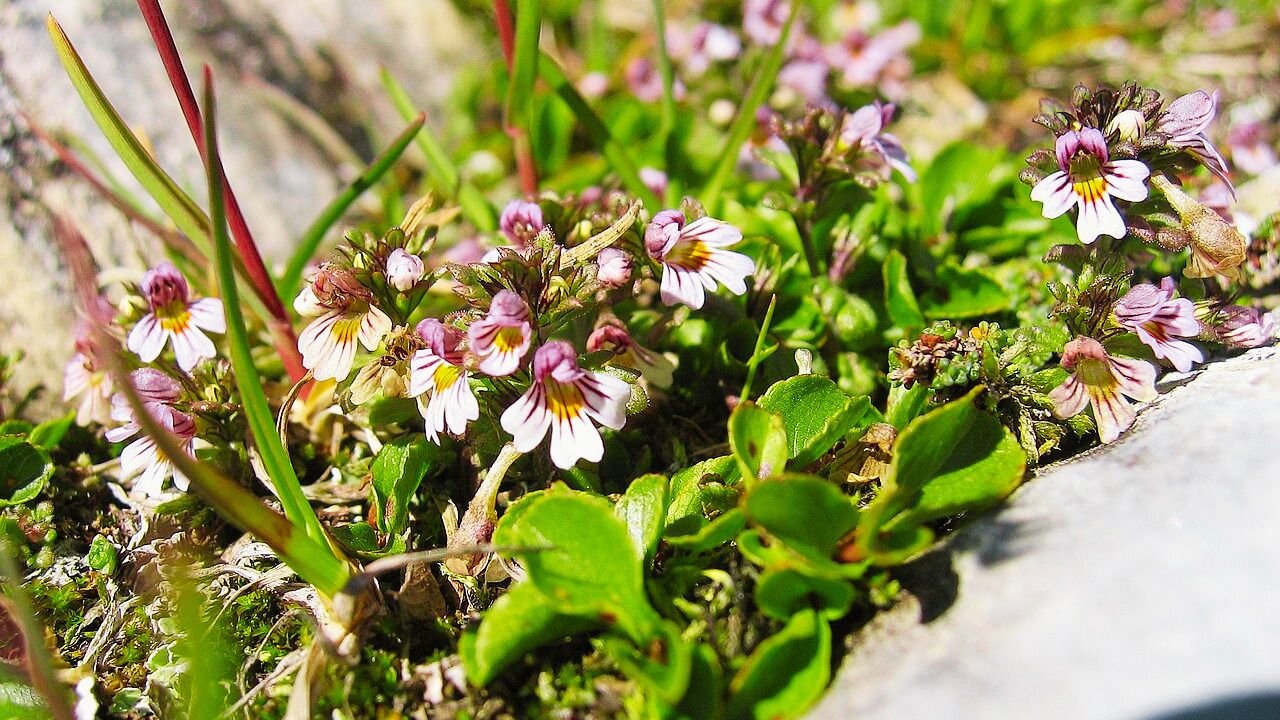
Euphrasia minima, commonly known as dwarf eyebright, is a tiny annual wildflower that naturally grows in alpine and subalpine meadows across parts of Europe. Despite its delicate appearance, this fascinating plant has adapted to survive in harsh mountain environments where temperatures remain cool, soils are often poor, and growing seasons are relatively short. Its small white flowers, often marked with yellow and purple details, make it an attractive addition to rock gardens, alpine collections, and naturalistic landscapes.
Unlike many common garden flowers, Euphrasia minima is a semi-parasitic plant. This means it develops connections with the roots of nearby grasses and small herbaceous plants, obtaining some nutrients and water from them while still carrying out photosynthesis through its own leaves. Understanding this unique growth habit is the key to successfully cultivating the plant.
Gardeners who enjoy growing rare alpine species often appreciate Euphrasia minima not only for its charming flowers but also for its ecological value. When planted in suitable conditions alongside compatible companion plants, it creates a beautiful miniature meadow effect that closely resembles its natural habitat.
Natural Habitat and Growing Conditions
In the wild, Euphrasia minima thrives in high-altitude grasslands, rocky slopes, limestone meadows, and open alpine pastures. These locations provide excellent drainage, abundant sunlight, cool temperatures, and limited competition from taller vegetation.
Recreating these conditions at home significantly improves the chances of successful cultivation. The plant performs best in cool climates where summer temperatures remain moderate. Regions with hot, humid summers can still support dwarf eyebright if it receives afternoon shade and consistent airflow.
Because it naturally grows among grasses and low-growing wildflowers, it rarely succeeds when planted alone. Including suitable neighboring plants allows the semi-parasitic roots to establish healthy connections, resulting in stronger growth and improved flowering.
Choosing the Right Location
Selecting the proper planting site is one of the most important steps when growing Euphrasia minima. Choose an open location that receives six to eight hours of sunlight each day while remaining relatively cool throughout the growing season.
Rock gardens, alpine troughs, gravel beds, and meadow-style plantings are excellent choices. Avoid heavily shaded areas since reduced sunlight weakens flowering and encourages excessive moisture around the foliage.
Good air circulation helps minimize fungal diseases, especially during wet weather. Avoid crowded planting arrangements where humidity remains trapped around the leaves.
Soil Requirements for Healthy Growth
Well-drained soil is absolutely essential for Euphrasia minima. Heavy clay soils retain excessive moisture and often lead to root problems, particularly during cool periods.
A sandy or gravelly soil mixture closely mimics the plant’s natural environment. Combining garden soil with coarse sand, grit, crushed stone, or fine gravel improves drainage while maintaining enough moisture for root development.
Neutral to slightly alkaline soil generally produces the best results, although the plant tolerates mildly acidic conditions if drainage remains excellent.
Rich soils containing excessive organic matter should be avoided. Overly fertile conditions encourage lush vegetative growth while reducing flowering and making the plant more susceptible to disease.
Planting Euphrasia minima Successfully
Because Euphrasia minima is an annual species, it is usually grown from seed. Fresh seed often provides the highest germination rates since viability gradually decreases over time.
The seeds are extremely small and should only be lightly pressed onto the soil surface rather than buried deeply. Light helps stimulate germination, making shallow sowing essential.
Autumn sowing often produces the best results because natural winter chilling helps break seed dormancy. In colder regions, spring sowing following a period of cold stratification also works well.
Keep the soil lightly moist during germination but never waterlogged. Seedlings are delicate and require gentle handling throughout their early growth.
If planting in an alpine bed, scatter seeds among established grasses or low-growing perennial companions rather than sowing them in isolated patches.
Companion Plants and Semi-Parasitic Growth
One of the most unique characteristics of Euphrasia minima is its semi-parasitic nature. Although it produces its own food through photosynthesis, it also benefits from attaching its roots to nearby host plants.
Fine grasses are among the most suitable companions because they provide steady access to moisture and nutrients without overwhelming the tiny eyebright plants.
Low-growing meadow flowers and compact alpine species can also serve as compatible neighbors, provided they do not create excessive shade.
Avoid vigorous spreading plants that quickly dominate the planting area. Large perennials and dense groundcovers may outcompete Euphrasia minima before it becomes established.
A diverse alpine meadow planting often produces healthier growth than a monoculture because it more closely resembles the plant’s natural ecosystem.
Watering Needs Throughout the Season
Consistent but moderate moisture supports healthy development throughout the growing season. The soil should remain lightly moist without becoming saturated.
During prolonged dry spells, water deeply but infrequently to encourage healthy root growth. Frequent shallow watering encourages weak roots and increases the risk of fungal diseases.
Morning watering allows excess moisture to evaporate during the day, keeping foliage dry by evening.
Once established, plants tolerate brief dry periods better than constantly wet conditions. Excellent drainage remains more important than frequent irrigation.
Container-grown specimens usually require more frequent watering because pots dry faster than garden beds.
Sunlight and Temperature Preferences
Bright sunlight encourages compact growth and abundant flowering. Full sun works well in cool climates where daytime temperatures remain moderate.
In warmer regions, providing light afternoon shade helps prevent heat stress while maintaining sufficient light for flowering.
Cool daytime temperatures between 50°F and 70°F generally support the healthiest growth. High summer heat may shorten the blooming period, especially if combined with high humidity.
Good airflow around the plants helps reduce temperature stress and prevents moisture buildup that can contribute to fungal infections.
Fertilizing with Care
Euphrasia minima has relatively low nutrient requirements. In fact, excessive fertilization often causes more problems than benefits.
Rich fertilizers encourage leafy growth while reducing flower production and potentially interfering with the plant’s natural semi-parasitic relationships.
If the surrounding companion plants require feeding, use only a light application of a balanced, slow-release fertilizer early in the growing season.
Avoid frequent liquid feeding, particularly products with high nitrogen content.
Maintaining lean, well-drained soil usually produces stronger plants and more attractive blooms than heavily fertilized conditions.
Seasonal Care and Maintenance
Because Euphrasia minima completes its life cycle within a single growing season, seasonal maintenance focuses primarily on supporting healthy flowering and successful seed production.
Remove aggressive weeds regularly so they do not outcompete the young plants. Weed carefully by hand to avoid disturbing the delicate root system.
Deadheading is generally unnecessary unless preventing self-seeding is desired. Allowing flowers to mature naturally enables the plant to produce seeds for future generations.
As the growing season ends, plants gradually dry and release mature seeds into the surrounding soil. Leaving the seed heads in place increases the likelihood of natural reseeding.
Avoid heavy mulching since thick organic layers may prevent tiny seedlings from emerging the following season.
Growing Euphrasia minima in Containers
Containers provide an excellent option for gardeners with unsuitable native soil. Shallow alpine pots, stone troughs, and well-drained planters closely replicate mountain growing conditions.
Use a gritty growing medium containing coarse sand, gravel, and a modest amount of quality potting soil.
Include small grasses or compatible alpine companions within the same container to support the plant’s semi-parasitic growth habit.
Position containers where they receive morning sunlight and good air circulation.
During winter, containers should remain outdoors in climates where natural cold helps maintain normal seed germination cycles.
Common Problems and Their Solutions
Euphrasia minima is generally resistant to major pests when grown under suitable conditions. Most problems arise from environmental stress rather than insect infestations.
Poor drainage frequently leads to root rot, weak growth, and premature plant death. Improving soil drainage usually resolves these issues.
Hot, humid weather may encourage fungal diseases, particularly when plants are overcrowded. Better spacing and improved airflow reduce disease pressure.
Failure to establish often results from growing the plant without nearby host species. Introducing compatible grasses significantly improves long-term success.
Poor germination may occur if seeds are old or planted too deeply. Fresh seed and shallow sowing typically provide much better results.
Propagation from Seed
Seed propagation remains the most reliable method of growing Euphrasia minima. Once plants mature, collect seeds after the capsules begin drying but before they naturally split open.
Store harvested seeds in a cool, dry location until autumn or early spring planting.
Many gardeners simply allow the plants to self-seed naturally within the alpine bed. Under suitable conditions, new seedlings emerge the following growing season with little intervention.
Because the species is annual, saving seed each year ensures a continuous display in future seasons.
Encouraging Long-Term Success
Growing Euphrasia minima successfully requires patience and an understanding of its specialized ecological needs rather than intensive gardening techniques. By recreating its cool alpine habitat, providing exceptionally well-drained soil, ensuring the presence of compatible companion plants, and avoiding excessive fertilization, gardeners can enjoy healthy annual displays year after year.
Its tiny flowers may appear modest compared to larger ornamental species, but their intricate beauty and unique biology make them a rewarding addition to alpine collections and naturalistic gardens. With proper care, thoughtful planting, and natural reseeding, Euphrasia minima can become a charming and sustainable feature that celebrates the remarkable diversity of mountain wildflowers.
